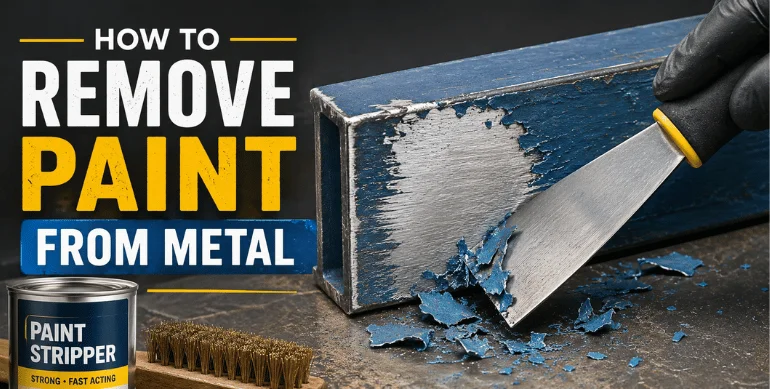
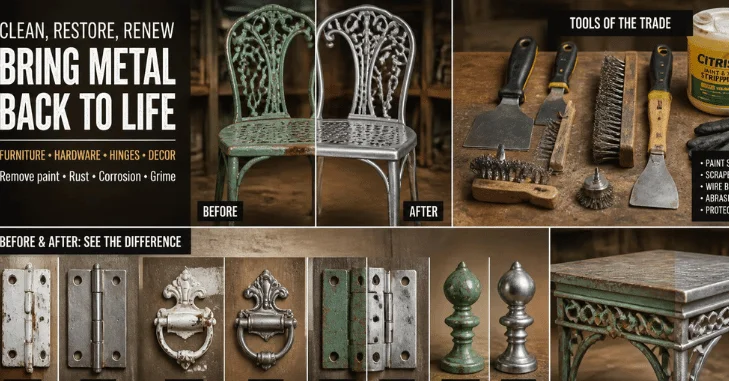
Old paint can hide good metal underneath, but the wrong removal method can leave scratches, discoloration, or warped edges. If you’re learning how to remove paint from metal, start with the gentlest method suited to the metal and coating. Thick layers may need stripper or heat, while loose paint may come away with careful scraping.
The safest approach is to start with the least aggressive method that fits the job. Use a plastic scraper for loose paint, heat or a compatible stripper for stubborn layers, and sanding mainly on sturdy steel or iron. Small, removable hardware can often be softened in hot water before scraping.
Quick method picker
| How to Remove Paint from Metal | Good starting method | Main advantage | Main caution |
| Loose paint on flat steel | Scraper | Fast and simple | Keep the blade angle low. |
| Small hinges and hardware | Hot water with baking soda or vinegar | Reaches small details | Use only on removable, heat-safe parts. |
| Thick or multiple paint layers | Metal-safe chemical stripper | Softens several layers | Follow label and ventilation instructions. |
| Ornate metalwork | Stripper plus a small brush | Reaches grooves | Avoid aggressive wire brushes on soft metal. |
| Sturdy steel or iron | Sanding or wire brushing | Useful for stubborn residue | Creates dust and can mark the surface |
| Aluminum or softer metal | Plastic scraper or compatible stripper | Reduces scratching | Avoid coarse abrasives. |
| Unknown old coating | Test for lead first. | Helps prevent hazardous dust | Don’t sand or heat until checked. |
Steel and iron can usually tolerate more abrasion than softer metals such as aluminum. On softer surfaces, Benjamin Moore recommends choosing gentler preparation methods to avoid unnecessary damage.
What you’ll need
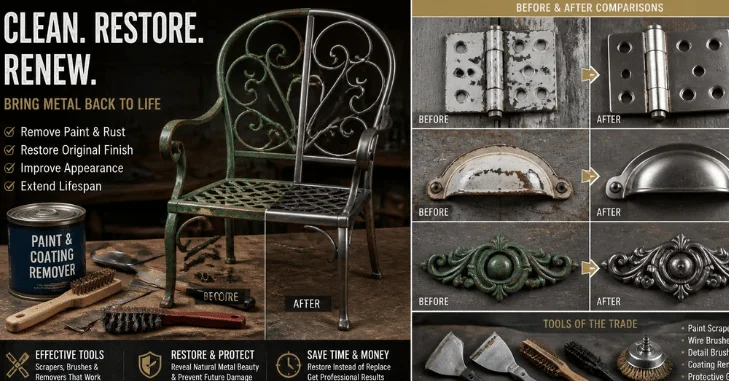
Prepare the job before opening a stripper or powering up a sander. A simple setup includes gloves, eye protection, a plastic or suitable metal scraper, clean rags, a small brush, and your chosen removal product or tool. Keep the manufacturer’s instructions nearby when using a chemical stripper.
Work in an area with good ventilation where you can control chips, dust, and drips. Cover nearby surfaces before you begin.
How to Remove Paint From Metal in 7 Steps
- Identify the metal and coating condition. Look for rust, loose edges, deep scratches, and multiple paint layers. Use gentler tools on aluminum, brass, plated surfaces, and decorative finishes. Sturdy steel and iron can tolerate more mechanical work.
- Check for possible lead paint. If the item is part of a pre-1978 home or has an unknown old coating, treat lead as a possibility. EPA guidance for DIY renovators warns that sanding, scraping, and other renovation work can release hazardous lead dust. Test first or use appropriate lead-safe practices.
- Clean the surface. Remove dirt, grease, and loose debris before stripping. A clean surface helps you see which areas need full removal and which need only light preparation.
- Test your method in a hidden spot. Apply the stripper, scraper, heat, or abrasive to a small area first. Stop if the metal discolors, scratches easily, or the finish underneath begins to change.
- Soften or loosen the coating. Apply a metal-compatible stripper according to its label, or use another suitable method from the table above. Chemical products often need time to soften the coating before scraping.
- Lift the softened paint. Scrape in controlled strokes instead of forcing the tool into the surface. Repeat the softening step on stubborn areas rather than immediately increasing pressure.
- Clean and dry the bare surface. Remove stripper residue and any remaining paint according to the product instructions. Dry the metal thoroughly before applying primer, a protective coating, or new paint.
Which removal method should you use?
Chemical stripper
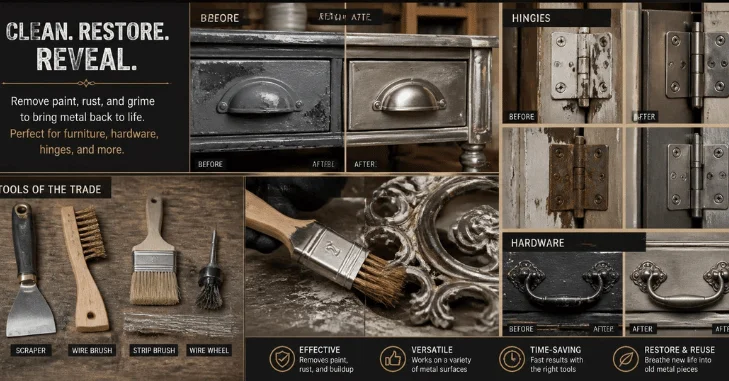
A metal-compatible paint stripper is useful when the coating is thick, layered, or sitting in grooves that are hard to sand. Apply an even coat and wait for the product’s stated working time before scraping. Paint commonly starts to wrinkle, bubble, or soften as the stripper works.
Choose a product whose label specifically allows its use on your metal. Ventilation, gloves, and eye protection are important because stripper formulations vary.
Hot water, baking soda, or vinegar
Small, removable hardware can often be treated with hot water. Several DIY guides recommend boiling or soaking suitable metal pieces with baking soda or vinegar, then checking the coating after about 15 minutes. The softened paint can then be scraped away.
This technique is better suited to hinges, brackets, knobs, and similar heat-safe parts than to large pieces of furniture. Use a dedicated container rather than cookware you plan to use for food.
Sanding and wire brushing
Sanding works well on sturdy steel or iron when the coating is already failing or when only small patches remain. An orbital sander, sanding block, wire brush, or stripping disc may speed up larger jobs.
Start with the least aggressive abrasive that does the job. Coarse discs can cut into thin or soft metal, so they’re a poor first choice for aluminum or delicate decorative pieces.
Heat gun
A heat gun can soften stubborn paint so that a scraper can lift it. Keep the tool moving and work in small sections rather than holding concentrated heat in one spot. Heat is commonly used on durable metal surfaces when chemical stripping isn’t preferred.
Don’t use heat on a coating that may contain lead. EPA guidance treats heating and other disturbances of old lead paint as potential exposure hazards.
How to avoid scratching or warping the metal
Start with a plastic scraper on softer or decorative surfaces. Move to stronger methods only when a gentler option fails. A hidden-area test is especially useful on aluminum, brass, chrome, or metal with a finish you want to preserve.
For metal chairs, inspect rust, loose fasteners, and structural problems before refinishing. Homlyst’s Enzyme Cleaner: The Ultimate Guide to Powerful Natural Cleaning for Stains, Odors, Everyday Messes, Deep Sanitization, and Eco-Friendly Home Care is a useful next step when restoration involves the frame as well as the finish.
If you’re working with contemporary aluminum furniture, Homlyst’s Best Bathroom Exhaust Fan also provides useful context on metal pieces used in modern interiors.
Do you need to strip every bit before repainting?
Not always. If the existing coating is firmly attached, the surface has no active rust, and the new coating is compatible, full removal may be unnecessary. Benjamin Moore advises assessing the condition of the existing finish before deciding whether complete stripping is needed.
Remove peeling edges and unstable areas, then smooth the transition between bare and painted sections. Clean the surface before priming or repainting.
Bare iron and steel should not remain exposed longer than necessary because moisture can cause new corrosion. Follow the primer or coating manufacturer’s preparation instructions for the metal you’re refinishing.
Conclusion
Removing paint from metal does not require the most aggressive tool—it requires the right method for the metal, coating, and condition of the surface. Start by identifying the material, checking for potential lead paint, and testing your chosen method in an inconspicuous area. Use gentle scraping or a compatible stripper for delicate surfaces, while sturdy steel and iron can usually handle controlled sanding or wire brushing.
After the paint is removed, clean and dry the metal thoroughly and protect bare steel or iron from corrosion before refinishing. Taking these steps helps achieve a cleaner result while reducing the risk of scratches, discoloration, warping, and unnecessary surface damage.
Finish the job cleanly.
Don’t choose the strongest removal tool first. Identify the metal, rule out lead risks, test a small area, and move from gentle methods to stronger ones only when needed. That approach protects the surface while still removing stubborn coatings.
If the project is part of a larger DIY furniture refresh, Homlyst’s bookshelf building guide also covers sanding and finishing steps that can help with nearby woodwork.
Frequently asked questions
Use the least abrasive method first. Try a plastic scraper, compatible chemical stripper, or gentle brush before using coarse sandpaper or a grinding disc. Test a hidden area and use extra care on aluminum, brass, plated metal, and decorative finishes.
Vinegar can help soften paint on small, removable metal pieces when combined with hot water. It isn’t usually the fastest choice for large surfaces or several heavy layers. Chemical stripper is often more practical for those jobs.
It depends on the object. Sanding suits sturdy, open steel surfaces and small areas of residue. Stripper is often easier to use on detailed shapes, thick coatings, and areas where aggressive abrasion could damage the metal.
Prime the surface when the coating system you’re using calls for it, especially on iron or steel that needs corrosion protection. Clean off residue first and let the surface dry fully. Follow the primer and topcoat instructions so the products remain compatible.