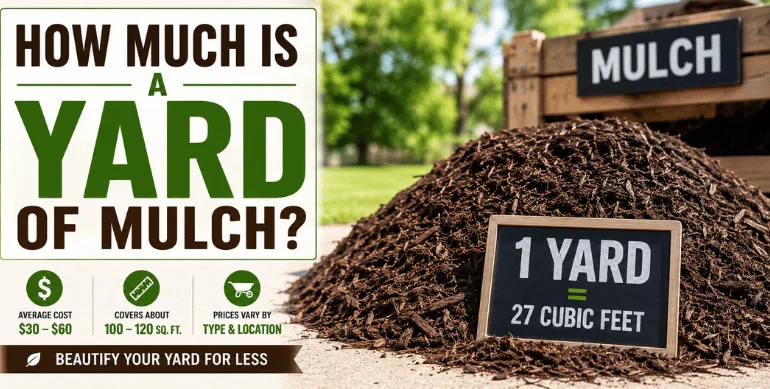
How much is a yard of mulch? For 2026 planning, expect to pay $30 to $135 per cubic yard of material in the U.S. Professionally delivered and installed mulch often costs $72 to $94 per cubic yard. One cubic yard equals 27 cubic feet and covers roughly 108 square feet at a depth of 3 inches.
The wide price range comes from the material you choose, your location, delivery charges, and whether you spread it yourself. A basic shredded wood product may cost far less than cedar, rubber, or specialty decorative products.
| How much is a yard of mulch? | 2026 planning figure |
| Material-only price | About $30 to $135 per cubic yard |
| Delivered and installed | About $72 to $94 per cubic yard |
| Volume in one cubic yard | 27 cubic feet |
| Coverage at 1 inch | 324 sq. ft. |
| Coverage at 2 inches | 162 sq. ft. |
| Coverage at 3 inches | 108 sq. ft. |
| Coverage at 4 inches | 81 sq. ft. |
| 2-cu. -ft. bags per cubic yard | 13.5, so buy 14 |
| 1.5 cu. -ft. bags per cubic yard | 18 |
| Typical delivery charge | About $50 to $150 |
Current national guides support these ranges and conversions, though local supplier prices can differ.
What Does a Cubic Yard Mean?
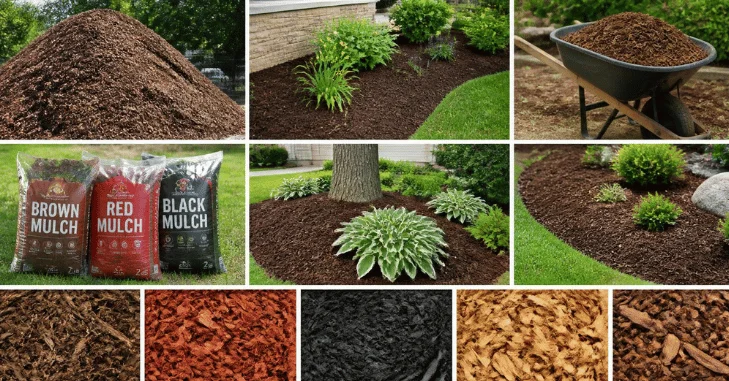
Suppliers usually sell bulk material by the cubic yard. A cubic yard is a volume measurement equal to a space that is 3 feet long, 3 feet wide, and 3 feet high.
Multiply those dimensions, and you get 27 cubic feet. This is why a bulk order can contain much more material than a few bags from a home-improvement store.
The amount of ground it covers depends on the depth. Spreading the same volume 2 inches deep covers about 162 square feet. At 3 inches deep, it covers about 108 square feet. At 4 inches deep, it covers about 81 square feet.
How Much Is a Yard of Mulch by Type?
Material choice can significantly affect your total cost. Current 2026 estimates place common shredded bark and hardwood products toward the lower end of the price range, while cedar and rubber products tend to cost more.
| Mulch type | Typical material-only price per cubic yard |
| Shredded bark or hardwood | $25 to $55 |
| Pine bark | $35 to $65 |
| Colored wood | $40 to $70 |
| Cedar | $45 to $90 |
| Rubber | $90 to $150 |
These figures work best as planning ranges rather than fixed store prices. Local supply, color, processing, seasonal demand, and regional transportation costs can affect the quote you receive.
If appearance is part of a wider garden refresh, Homlyst’s guide to Rug on Carpet also covers edging, planting, and other projects that pair naturally with fresh ground cover.
What Changes the Total Price?

The product itself is only one part of your final budget. Delivery can add roughly $50 to $150, depending on the distance and order size. Professional spreading adds labor costs as well. Lawn Love estimates labor at about $22 to $55 per cubic yard, while other current guides show comparable regional variation.
A small order can be affected more heavily by a flat delivery charge. For example, paying a $75 delivery fee on one cubic yard adds $75 per yard. The same fee spread across five yards adds only $15 per yard.
Your location matters too. Suppliers set prices based on local material availability, fuel costs, wages, and competition. For that reason, a national average is useful for budgeting but is not a substitute for a local quote.
How to Calculate How Many Cubic Yards You Need
Use this formula:
Square feet × desired depth in inches ÷ 324 = cubic yards needed
Suppose a garden bed measures 20 feet by 15 feet. That gives you 300 square feet. If you want a 3-inch layer, the calculation is
300 × 3 ÷ 324 = 2.78 cubic yards
You would normally round that amount to about 3 cubic yards rather than risk running short.
Using current national price ranges, three cubic yards could cost roughly $90 to $405 for the material alone. A broad installed estimate of $72 to $94 per cubic yard puts the same three-yard project at about $216 to $282 before any unusual site or service charges.
Measure separate beds individually if they have different shapes or require different depths. Add the totals before placing your order.
Bulk Mulch vs. Bags: Which Makes More Sense?
A bulk delivery often makes sense when you have several beds to cover. Bags remain convenient for a small repair, a single tree ring, or an area where loose material would be difficult to unload.
| Buying method | Best suited to | Main advantage | Main drawback |
| Bulk | Medium or large projects | Fewer packages and efficient volume pricing | Delivery fee and unloading space |
| Bagged | Small beds and touch-ups | Easy to buy in exact small amounts | More bags to carry for large jobs |
A 2-cubic-foot bag represents 2/27 of a cubic yard. You therefore need 13.5 bags to equal one full cubic yard, which means purchasing 14 bags if you need at least that much material. Eighteen 1.5-cubic-foot bags also equal one cubic yard.
Before choosing bulk solely based on the listed price, compare the total delivered cost with the cost of buying enough bags. Delivery minimums can change which option is cheaper for a small project.
If you plan to move loose material around the property yourself, Homlyst’s Why Concrete Driveways Are a Smart Investment for Your Home can help you choose a cart suited to hauling soil and other heavy garden materials.
How Deep Should You Spread It?
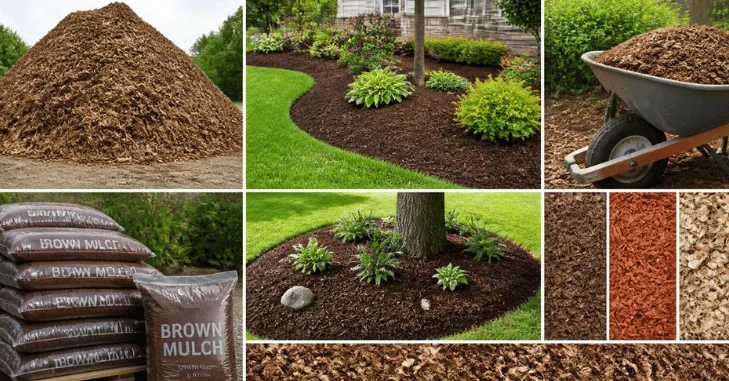
A layer about 2 to 4 inches deep works well for many garden applications. The University of Minnesota Extension recommends this range to help suppress weeds while maintaining soil aeration. Keep the material away from direct contact with tree trunks and plant stems.
More is not automatically better. Piling material too deeply can interfere with air and water movement around plant roots.
For beds where unwanted growth is already a problem, Homlyst’s guide to How to Bleed a Radiator explains other ways to manage weeds. The guide also notes that covering the soil can limit the amount of sunlight weed seeds receive.
Conclusion
Knowing how much a yard of mulch costs makes it easier to plan your landscaping budget without overbuying. In 2026, a cubic yard generally costs about $30 to $135 for materials, while delivery and professional installation can raise the total. Measure your planting areas, choose an appropriate depth, calculate the cubic yards needed, and compare total delivered prices from local suppliers. For larger projects, bulk mulch can provide better value, while bagged mulch may be more practical for smaller areas.
Measure First, Then Compare Delivered Prices
Start by measuring every bed and deciding on your target depth. Multiply the square footage by the depth in inches, then divide by 324. Round the result to a practical order size.
Next, call two or three nearby suppliers and ask for the total delivered price, not just the per-yard rate. Compare that figure with the cost of buying enough bags to cover the same area. That simple check gives you a project budget based on your property rather than on a national average.
Frequently Asked Questions
Material alone generally costs about $30 to $135 per cubic yard. Delivered and professionally installed mulch commonly costs around $72 to $94 per cubic yard, according to current national guides. Your final quote depends on the product type, region, delivery distance, and labor costs.
One cubic yard covers about 324 square feet at 1 inch deep, 162 square feet at 2 inches deep, 108 square feet at 3 inches deep, or 81 square feet at 4 inches deep.
You need 13.5 two-cubic-foot bags to equal 27 cubic feet. Since stores do not sell half a bag, buy 14 bags when you need at least one full cubic yard.
Bulk can offer better value for larger projects, but delivery charges matter. Bags can make more financial sense for a small area because you can buy only what you need and avoid a bulk-delivery minimum.
Using a $30 to $135 material-only planning range, 10 cubic yards would cost roughly $300 to $1,350 before delivery or installation. Local supplier quotes may fall within a narrower range.