Enzymatic cleaners have become one of the most effective and environmentally friendly solutions in modern cleaning, offering a powerful alternative to traditional chemical-based products. Unlike ordinary cleaners that only mask odors or remove surface-level dirt, enzymatic cleaners work at a biological level to break down organic matter, including stains, grease, food residue, and bodily waste.
These specialized solutions use natural enzymes, proteins that accelerate chemical reactions, to target and digest specific types of messes, making cleaning deeper, more efficient, and longer lasting. From household uses like carpet and kitchen cleaning to more demanding applications such as pet stain removal and industrial sanitation.
It provide a versatile and safe option for maintaining hygiene. Understanding how they work, their benefits, and their proper usage can help you achieve a cleaner, healthier, and more eco-conscious living environment.
| Section | Key Points |
| Introduction | Eco-friendly cleaners that break down organic stains at a biological level. |
| What is an Enzymatic Cleaner? | Uses enzymes to digest proteins, fats, carbs, and waste materials. |
| Core Mechanism | Enzymes break molecules into smaller, harmless particles. |
| Protease Function | Breaks down protein-based stains like blood and food. |
| Lipase Function | Targets grease, oils, and fatty stains. |
| Amylase Function | Breaks down starches and sugary residues. |
| How It Works | Enzymes + bacteria remove stain source, not just surface dirt. |
| Deep Cleaning Effect | Eliminates stains from the root, not just surface cleaning. |
| Odor Removal | Permanently removes smell-causing molecules. |
| Eco-Friendly Nature | Biodegradable and safe for the environment. |
| Pet Safety | Non-toxic and safe for homes with animals. |
| Human Safety | Safe for children when used correctly. |
| Pet Uses | Removes urine, feces, and pet odor. |
| Bathroom Uses | Cleans toilets, drains, and organic buildup. |
| Kitchen Uses | Removes grease, spills, and trash odors. |
| Laundry Uses | Treats sweat, blood, and food stains. |
| Industrial Uses | Used in hospitals, restaurants, and sanitation systems. |
| Application Step 1 | Remove visible dirt before applying. |
| Application Step 2 | Apply enough solution to soak the area. |
| Application Step 3 | Let enzymes sit for activation. |
| Application Step 4 | Allow air drying for best results. |
| Reapplication | Tough stains may need multiple treatments. |
| Multi-Purpose Type | General household cleaning use. |
| Pet-Specific Type | Designed for animal stains and odors. |
| Carpet Cleaner Type | Deep fabric and upholstery cleaning. |
| Industrial Type | Heavy-duty cleaning for professional use. |
| Safety Rule | Never mix with bleach or chemicals. |
| Storage Tip | Keep in a cool, dry, dark place. |
| Testing Tip | Always test on a small area first. |
| Limitation: Speed | Works slower than chemical cleaners. |
| Limitation: Stains | Not effective on rust or minerals. |
| Limitation: Reuse | May require repeated application. |
| Choosing Tip 1 | Match the cleaner to the stain type. |
| Choosing Tip 2 | Check surface compatibility. |
| Choosing Tip 3 | Consider pet and child safety. |
What is an Enzymatic Cleaner?
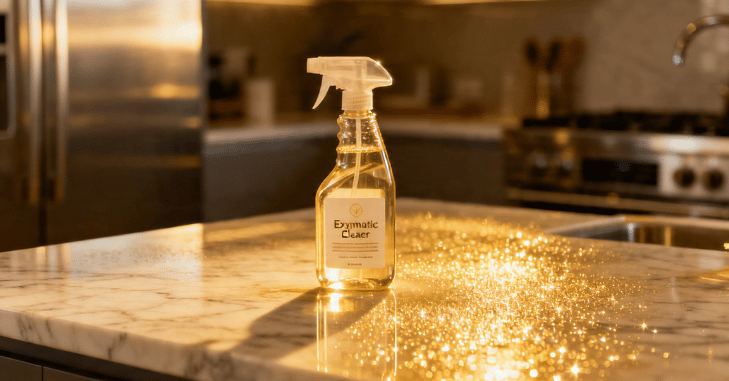
An enzymatic cleaner is a specially formulated cleaning solution that uses natural biological catalysts called enzymes to break down and remove organic matter at a molecular level. These enzymes are proteins that accelerate chemical reactions, enabling them to effectively target and digest various stains and waste.
For example, protease enzymes break down proteins in blood, sweat, and food stains, while lipase enzymes break down fats and oils in grease and cooking spills. Amylase enzymes help dissolve carbohydrates, including starches and sugary residues, and other formulations are designed to handle urine, fecal matter, vomit, and various biological wastes.
Unlike conventional cleaners that often mask odors or only remove surface dirt, enzymatic cleaners go deeper by breaking down the actual source of the stain or smell. This process not only removes visible messes but also permanently eliminates unpleasant odors, leaving surfaces truly clean and fresh.
How Does an Enzymatic Cleaner Work?
Enzymes act like tiny biological “scissors” that cut complex organic molecules into smaller, harmless particles. Each enzyme targets a specific type of material:
- Protease → breaks down proteins
- Lipase → breaks down fats and oils
- Amylase → breaks down starches and carbohydrates
- Once the enzymes break down the waste, bacteria feed on the remaining particles, completely eliminating stains and odors instead of covering them up.
- This is why enzymatic cleaners are especially powerful against deep, lingering smells.
Key Benefits of Enzymatic Cleaners
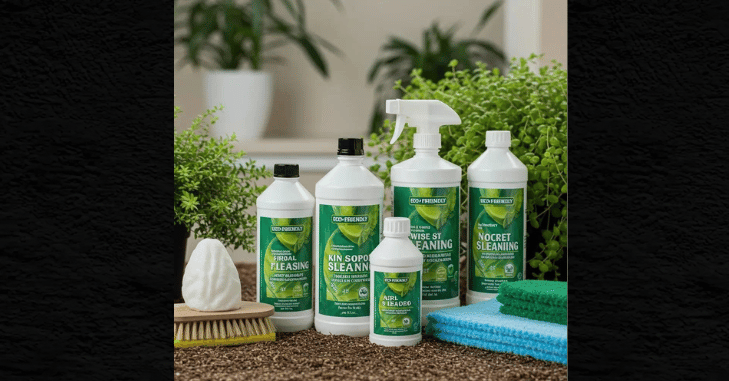
It offers several important benefits that make it highly effective and eco-friendly. They provide deep cleaning action by going beyond the surface to eliminate the root cause of stains and odors rather than just covering them up. Most of these cleaners are eco-friendly and biodegradable, as they are made from natural ingredients that safely break down in the environment.
They are also safe for both pets and humans because they are generally non-toxic, making them suitable for use in homes with children and animals. Instead of simply masking unpleasant smells, enzymatic cleaners deliver true odor elimination by permanently breaking down odor-causing molecules.
In addition, they are highly versatile and can be used on a wide range of surfaces, including carpets, tiles, fabrics, and hard floors, making them a practical solution for many cleaning needs.
Common Uses of Enzymatic Cleaners
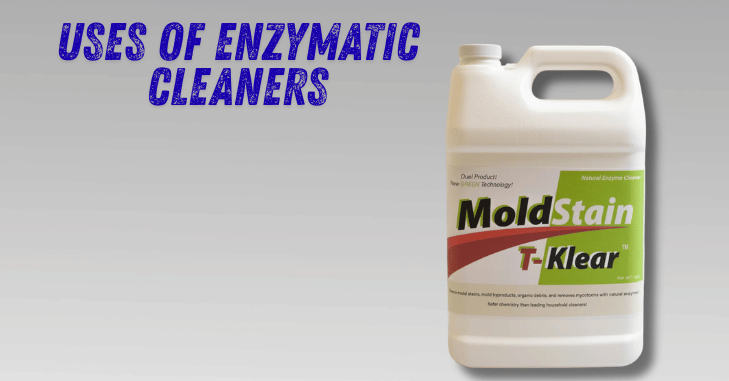
These are widely used in both household and professional settings:
1. Pet Stains and Odors
- Urine accidents on carpets
- Pet bedding cleaning
- Litter box odor control
2. Bathroom Cleaning
- Toilet stains
- Drain odors
- Mold and organic buildup
3. Kitchen Cleaning
- Grease on stovetops
- Food spills
- Trash bin odors
4. Laundry Treatment
- Sweat stains
- Blood stains
- Food and drink spills
5. Industrial and Medical Use
- Biohazard cleanup
- Hospital sanitation
- Waste treatment systems
How to Use an Enzymatic Cleaner?

Using enzymatic cleaners correctly is important for the best results:
- Remove Excess Dirt – Wipe or blot away surface waste first
- Apply Generously – Spray or pour enough cleaner to soak the affected area
- Let It Sit – Allow enzymes time to break down stains (usually 10–30 minutes or more)
- Do Not Wipe Immediately – Let it air dry for full effectiveness
- Repeat if Necessary – Tough stains may require multiple treatments
Types of Enzymatic Cleaners
It comes in different types based on their specific uses. Multi-purpose cleaners are suitable for general household cleaning tasks and can handle a variety of everyday stains and messes. Pet-specific cleaners are specially designed to remove urine, feces, and stubborn pet odors, making them ideal for pet owners.
Carpet and upholstery cleaners are formulated for deep cleaning fabrics and textiles, effectively removing embedded dirt and organic stains. Industrial-strength cleaners, on the other hand, are used in hospitals, restaurants, and other heavy-duty environments where strong and reliable cleaning performance is required.
Enzymatic Cleaner vs Chemical Cleaner
| Feature | Enzymatic Cleaner | Chemical Cleaner |
| Cleaning Method | Breaks down organic matter | Uses harsh chemicals |
| Safety | Eco-friendly, non-toxic | Can be toxic or irritating |
| Odor Removal | Eliminates the source of odor | Often masks odor |
| Environmental Impact | Biodegradable | Can pollute the environment |
| Best Use | Organic stains and smells | Heavy chemical or mineral stains |
Limitations of Enzymatic Cleaners
While powerful, enzymatic cleaners do have some limitations:
- They work more slowly than chemical cleaners
- Require time to activate properly
- Not effective on non-organic stains like rust or mineral deposits
- May need repeated applications for heavy buildup
Safety Tips When Using Enzymatic Cleaners
Always read the product instructions carefully before using an enzymatic cleaner to ensure safe and effective application. Avoid mixing it with bleach or other strong chemicals, as this can damage the enzymes and reduce its cleaning power.
Store the cleaner in a cool, dry place to maintain its effectiveness over time, and keep it away from direct sunlight, which can weaken enzyme activity. It is also recommended to test the product on a small, hidden area first before applying it fully, helping to ensure it does not cause any damage or discoloration to the surface.
How to Choose the Best Enzymatic Cleaner?
When selecting an enzymatic cleaner, consider:
- Type of stain you want to remove
- Surface compatibility (fabric, tile, wood, etc.)
- Safety for pets and children
- Strength of enzyme formulation
- Fragrance preference (some are odor-free, others lightly scented)
Conclusion
Enzymatic cleaners offer a smart, safe, and highly effective way to clean organic messes without relying on harsh chemicals. Their ability to break down stains at the molecular level makes them especially useful for homes with pets, children, or anyone looking for eco-friendly cleaning solutions.
While they may take a little more time to work compared to traditional cleaners, their deep-cleaning power and long-lasting results make them an excellent choice for modern households. By understanding how they work and using them correctly, you can achieve a cleaner, healthier, and fresher environment throughout your home.
Want to know about Prefab Double Garage: A Modern, Efficient Solution for Extra Space Check out our Quick Bites category.
FAQs
An enzymatic cleaner is a cleaning solution that uses natural enzymes to break down organic stains like food, grease, urine, and other biological waste at a molecular level.
They work by using enzymes such as protease, lipase, and amylase to break down complex organic matter into smaller, harmless particles, eliminating stains and odors completely.
Yes, most cleaners are non-toxic, eco-friendly, and safe for use around children and pets when used according to instructions.
They can be used on carpets, fabrics, tiles, upholstery, kitchen surfaces, bathrooms, and even in industrial cleaning environments.
Yes, unlike chemical cleaners that only mask smells, enzymatic cleaners remove odors by breaking down the source of the smell itself.
No, they are most effective on organic stains like food, blood, urine, and grease, but not suitable for non-organic stains like rust or mineral deposits.