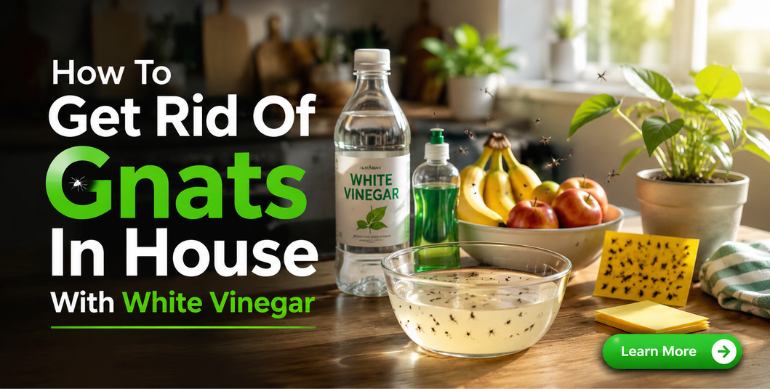
Few household pests are as annoying as gnats. One minute your kitchen looks spotless, and the next, tiny flying insects are buzzing around your fruit bowl, sink, houseplants, or trash can. While they may seem harmless, a growing gnat population can quickly become frustrating.
The good news is that you don’t need expensive chemical sprays to solve the problem. If you’re wondering how to get rid of gnats in house with white vinegar, you’re in the right place. White vinegar is affordable, natural, and surprisingly effective when used correctly. This complete guide explains why gnats appear, how white vinegar works, the best homemade vinegar traps, common mistakes to avoid, and practical prevention tips that keep your home gnat-free.
| How to Get Rid of Gnats in House With White Vinegar? | Action | Benefit |
| Find the Source | Check drains, houseplants, fruit, and trash. | Stops gnats from breeding. |
| Make a White Vinegar Trap | Mix white vinegar with 2–3 drops of dish soap. | Attracts and traps adult gnats. |
| place Traps | Set traps near sinks, fruit bowls, plants, and trash cans. | Catches more gnats quickly. |
| Replace Every 2 Days | Refresh the vinegar solution regularly. | Keeps the trap effective. |
| Prevent Gnats | Clean the drains, dry the plant soil, store the fruit, and empty the trash. | Helps prevent gnats from returning. |
How to Get Rid of Gnats in House With White Vinegar Naturally?

If you’re looking for an affordable and chemical-free solution, learning how to get rid of gnats in house with white vinegar is one of the easiest and most effective approaches. White vinegar attracts adult gnats with its strong scent, and when combined with a few drops of liquid dish soap, it becomes a highly effective trap.
The soap disrupts the liquid’s surface tension, causing the gnats to sink and drown rather than escape. Although this method doesn’t kill eggs or larvae, it can quickly reduce the adult gnat population when used consistently.
For the best results, place vinegar traps near fruit bowls, kitchen sinks, trash cans, or houseplants, and pair them with regular cleaning and moisture control to prevent gnats from returning.
Why Are Gnats Suddenly in Your House?
Before treating the problem, it’s important to understand what attracts gnats indoors. These tiny insects thrive wherever they find moisture and organic matter. Even a clean house can attract them if the conditions are right.
Common causes include:
- Overwatered indoor plants
- Ripe or rotting fruit
- Dirty kitchen drains
- Overflowing garbage bins
- Compost containers
- Damp mops or sponges
- Standing water
- Food spills
Finding the source is the first step toward permanently eliminating the infestation.
Types of Gnats Found Indoors
Not every tiny flying insect is the same. Identifying the type helps you choose the most effective treatment.
| Type | Usually Found Around | Main Attraction |
| Fruit Gnats (Fruit Flies) | Fruit bowls, kitchens | Ripened fruit and sugary liquids |
| Fungus Gnats | Houseplants | Moist potting soil |
| Drain Gnats | Bathroom and kitchen drains | Organic buildup inside pipes |
Fortunately, white vinegar traps work well for all three adult varieties.
Does White Vinegar Really Kill Gnats?
Yes, but with one important detail. White vinegar alone doesn’t usually kill gnats instantly. Instead, it acts as an attractant. When mixed with a few drops of liquid dish soap, the solution becomes an effective trap.
Here’s why it works:
- The vinegar attracts the gnats.
- Dish soap breaks the surface tension.
- Gnats sink into the liquid.
- They cannot escape.
This simple method is inexpensive, chemical-free, and easy to make using ingredients already found in most homes.
How to Get Rid of Gnats in the House With White Vinegar?

Follow these steps carefully for the best results.
Step 1: Gather Your Supplies
You’ll need:
- White vinegar
- Liquid dish soap
- Small bowls or jars
- Plastic wrap (optional)
- Toothpick
Everything costs only a few dollars if you don’t already have it.
Step 2: Make the Vinegar Trap
Fill a small bowl with approximately one cup of white vinegar.
Add:
- 2–3 drops of dish soap
Avoid adding too much soap because excessive bubbles can reduce the trap’s effectiveness. Stir gently.
Step 3: Place the Trap Strategically
Place your white vinegar trap in areas where gnats are most active, such as kitchen counters, fruit bowls, trash cans, houseplants, kitchen sinks, bathroom sinks, and recycling bins. Positioning multiple traps throughout your home can catch more gnats at once and help reduce the infestation faster.
Step 4: Optional Plastic Wrap Method
For heavier infestations:
- Cover the bowl with plastic wrap.
- Secure it with a rubber band.
- Poke several tiny holes using a toothpick.
The gnats fly inside but struggle to escape.
Step 5: Replace Every Two Days
Fresh vinegar works better. Replace the solution every 48 hours until you stop seeing gnats. Most infestations improve within several days.
Why White Vinegar Works So Well
White vinegar contains acetic acid, which gives off a strong scent that attracts many small flying insects searching for fermenting food sources. Once they land on the surface, the soap causes them to sink almost immediately.
Unlike chemical insecticides, this method:
- Produces no toxic fumes
- Costs very little
- Is environmentally friendly
- Can be used repeatedly
White Vinegar vs Apple Cider Vinegar
Many homeowners wonder which vinegar works better.
| Feature | White Vinegar | Apple Cider Vinegar |
| Cost | Lower | Slightly higher |
| Smell | Sharp | Sweet |
| Attractiveness to Fruit Flies | Good | Excellent |
| Household Availability | Very common | Common |
| Cleaning Ability | Excellent | Moderate |
Apple cider vinegar often attracts fruit flies more effectively because of its sweeter smell. However, if you’re specifically learning how to get rid of gnats in the house with white vinegar, don’t worry; it remains an effective and affordable solution for most indoor infestations.
Best Places to Use White Vinegar Traps
Different gnat species prefer different areas.
Kitchen
Place traps:
- Near fruit
- Beside the garbage bins
- Next to the recycling containers
- Near coffee makers
Bathroom
Gnats often breed inside drains.
Place traps:
- Near sinks
- Around the shower drains
- Besides toilets, if moisture is present
Houseplants
Fungus gnats love damp soil.
Place traps:
- Besides plant pots
- Near windows
- Around indoor gardens
Laundry Room
Warm moisture attracts insects.
Keep traps near:
- Washing machines
- Utility sinks
- Wet towels
Additional Natural Ways to Eliminate Gnats

Fungus gnats often lay their eggs in moist potting soil, so allowing the top inch of soil to dry before watering your houseplants can help break their breeding cycle. Regularly cleaning kitchen and bathroom drains is also important, as organic buildup inside pipes attracts gnats.
Pour boiling water down the drain, followed by baking soda and white vinegar, to help remove residue. In addition, store ripe fruit in the refrigerator instead of leaving it on the counter, and throw away any spoiled produce promptly to eliminate a common food source.
Empty your trash frequently and wash garbage cans with hot water and white vinegar to remove food residue and odors. Finally, inspect faucets, pipes, and the area under sinks for leaks, as even a small amount of standing water can create the damp conditions gnats need to thrive.
Common Mistakes to Avoid
Many people accidentally reduce the effectiveness of vinegar traps.
Avoid these mistakes:
Using Vinegar Without Soap
Soap is what traps the insects. Without it, many gnats simply fly away.
Ignoring the Breeding Source
Traps remove adult gnats. If larvae remain, new adults will continue appearing.
Overwatering Plants
Wet soil is one of the biggest reasons fungus gnats return.
Leaving Dirty Dishes Overnight
Food residue attracts flying insects quickly.
Keeping Old Vinegar Traps
Replace traps every two days. Fresh vinegar attracts more gnats.
How Long Does It Take to Get Rid of Gnats?
The answer depends on the infestation.
| Infestation Size | Estimated Time |
| Small | 2–4 days |
| Moderate | 1 week |
| Heavy | 2–3 weeks |
Consistency matters.
Continue replacing traps until you no longer notice flying insects.
How to Prevent Gnats From Coming Back?

Prevention is easier than treatment.
Follow these habits:
- Wipe kitchen counters daily.
- Empty indoor trash regularly.
- Store produce properly.
- Don’t overwater plants.
- Keep drains clean.
- Repair plumbing leaks.
- Remove standing water.
- Clean pet food bowls after meals.
These simple routines significantly reduce future infestations.
Pros and Cons of Using White Vinegar
| Pros | Cons |
| Affordable | Strong smell |
| Chemical-free | Doesn’t kill larvae directly |
| Easy to prepare | Requires replacing regularly |
| Safe around most pets and children when placed responsibly | May work slower than pesticides |
| Eco-friendly | Severe infestations may need additional methods. |
Real-Life Example

Imagine noticing tiny flying insects around your kitchen every morning. After checking the area, you discover several overripe bananas and a damp trash bin.
You create three white vinegar traps:
- One beside the fruit bowl
- One near the garbage
- One beside the sink
You also throw away spoiled fruit, disinfect the trash can, and wipe the counters. Within three days, the number of gnats drops dramatically. After one week of replacing the vinegar every two days, the infestation is gone. This combination of trapping and cleaning is often far more effective than using either method alone.
Final Thoughts
Learning how to get rid of gnats in house with white vinegar is one of the easiest and most affordable ways to tackle a frustrating indoor pest problem. A simple mixture of white vinegar and a few drops of dish soap can capture adult gnats effectively, while regular cleaning and moisture control help eliminate the conditions that allow them to breed.
For the best results, don’t rely on traps alone. Combine them with proper food storage, clean drains, dry potting soil, and routine household maintenance. With a little consistency, you can enjoy a cleaner, healthier, and gnat-free home naturally.
Have you tried the white vinegar method? Share your experience or favorite natural gnat-control tip in the comments below, and help others find a solution that works.
Want to know about Steam Cleaner Guide: 10 Powerful Benefits, Deep Cleaning Uses, Safety Tips, and How to Choose the Perfect ModelCheck out our Quick Bites category.
Frequently Asked Questions
Gnats are drawn to the pleasant scent of apple cider vinegar, so you may use it to create a simple trap, a real thirst trap, if you will. Add a few drops of dish soap to a bowl or jar along with a few tablespoons of apple cider vinegar.
White vinegar is a perfect substitute for apple cider vinegar. Acetic acid, which imitates the scent of ripening fruit that gnats find enticing, is present in both.
No, gnats are not repulsed by the scent of vinegar; on the contrary, they are drawn to it. Their main source of nourishment is fermenting and rotting food, which is mimicked by the acetic acid in vinegar.
In general, white vinegar is significantly less dangerous than chemical insecticides; nonetheless, keep traps out of the reach of little children or inquisitive dogs.