
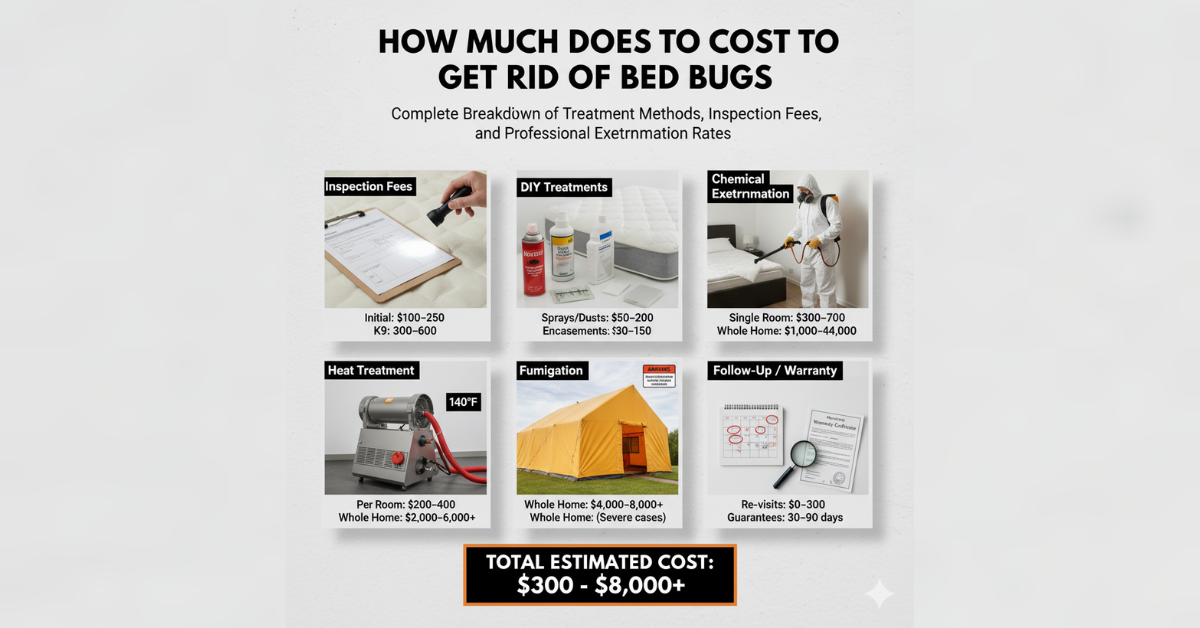
How Much Does It Cost To Get Rid Of Bed Bugs?
Bed bugs are tiny, resilient, and—let’s be honest—built for drama. Once they move in, they can wreck sleep, stress your budget, and make your home feel like a ticking time bomb of itchy welts. The most common question I hear is: How much will it cost to get rid of them? The answer depends on several factors: the severity of the infestation, your location, whether you tackle the problem yourself or hire professionals, and the treatment method you choose.
This article on How Much Does It Cost To Get Rid Of Bed Bugs walks you through each cost component—inspections, DIY options, professional methods, follow-ups, and hidden expenses—so you can plan a realistic budget and pick the best strategy for your situation.
| Category / Method | Typical Cost Range | Key Details & Notes |
| Professional Inspection (Visual) | $50 – $200 | The cost depends on the region and property size. Some companies deduct the fee if treatment is booked. |
| Canine Inspection | $150 – $500 | Highly accurate for low-level infestations; may be higher for large properties. |
| Self-Inspection | $0 | Free, but often misses hidden infestations and is not considered reliable alone. |
| Chemical Treatment | $200 – $800 (1 room) / $400 – $1,500+ (whole home) | Involves residual sprays and dusts. Often used as first-line treatment; may require multiple visits. |
| Heat Treatment | $800 – $4,000+ | Heats the entire room/home to 120–140°F. Fast and effective, but costly and must be applied evenly. |
| Cryonite / CO₂ Freezing | $200 – $500 (add-on) | Used to freeze exposed bugs instantly. Usually part of a multi-method plan rather than a standalone solution. |
| Steam Treatment | $100 – $300 (add-on) | Chemical-free option for furniture, beds, and surfaces. Often integrated with other treatments. |
| Fumigation / Tent Treatment | $1,500 – $5,000+ | Whole-structure gas treatment. Highly effective but disruptive and expensive. |
| Integrated Pest Management (IPM) | $300 – $3,000+ | Combines inspection, chemicals, heat/steam, monitoring, and follow-ups. Effective and prevention-focused. |
Quick snapshot: what influences cost
Before we dive deeper, here are the main cost drivers you’ll see again and again:
- Infestation size (a few bed bugs vs. whole-house invasion)
- Property type (studio apartment vs. multi-room house or building with multiple units)
- Location (urban centers typically cost more than rural areas)
- Treatment method (chemical sprays, heat, freezing, steam, encasements, or combined tactics)
- Access and prep needs (moving furniture, laundering, repairs)
- Number of visits and guarantees (some pros include follow-ups; others bill extra)
Understanding those will help you parse the numbers below.
Inspection fees: the first step to control
An accurate inspection is the foundation of any sensible treatment plan, as it reveals where the bugs are hiding, how long they’ve been there, and which treatment method is most likely to be effective. While self-inspection is free, it often overlooks active hiding spots and should not be relied upon as the sole method of diagnosis.
Most pest-control companies offer professional visual inspections, which typically cost between $50 and $200, depending on the property’s size and location. Regardless of the type of inspection, it should ideally include a written report along with a clear treatment plan that outlines the costs and any guarantee terms. It is also essential to have all of this in writing.
DIY options — low-cost, variable success
If the infestation is small and you’re willing to be meticulous, DIY can be practical. It’s cheaper upfront but requires time, discipline, and a realistic view of limitations.
Common DIY costs:
- Insecticide sprays (residual contact sprays): $8–$25 per bottle. You’ll need multiple bottles for serious spots.
- Aerosol “knockdown” sprays: $5–$15 each (temporary effect; not a long-term solution).
- Diatomaceous earth (food-grade): $8–$25 per container. Works slowly by dehydrating insects.
- Mattress and box-spring encasements: $30–$200 each (dependent on size and quality). These are essential preventative tools.
- Portable steamers: $50–$200. Effective when used correctly (steam must be hot and applied where bugs hide).
- Claw/bed bug interceptors (under bed legs): $10–$40 for a set of 4.
- High-temperature dryer cycles: The cost depends on the electricity used for home dryers or laundromat fees ($2–$5 per load at laundromats).
- Monitoring traps and detectors: $10–$50.
Realistic DIY total for a single-bedroom treatment: $100–$500, depending on the tools you already own and the severity. But be honest: DIY alone often fails for moderate to heavy infestations; the savings can evaporate if you end up hiring professionals later.
Professional extermination methods — what they do and what they cost
Professional pest control uses a range of techniques. Below is a breakdown of the most common methods, along with typical cost ranges and their pros/cons.
1. Chemical (Liquid Residual + Dusts)
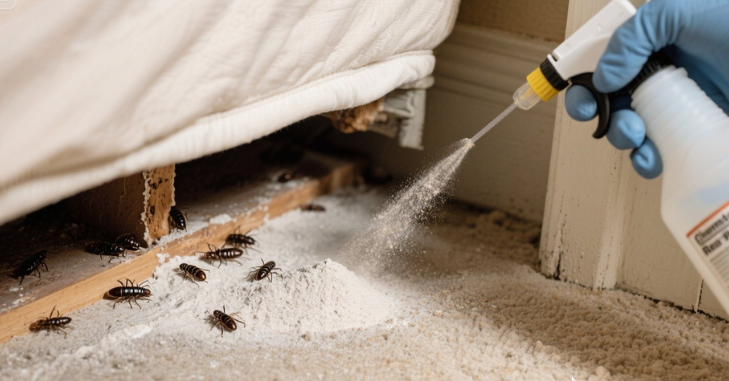
Chemical treatments involve the application of residual insecticides into cracks, crevices, and familiar hiding places where bed bugs reside. In addition to liquid sprays, dust formulations such as diatomaceous earth, silica, or other insecticidal powders are applied into voids to reach insects in less accessible areas.
2. Heat Treatment (Whole-Room/Whole-House)
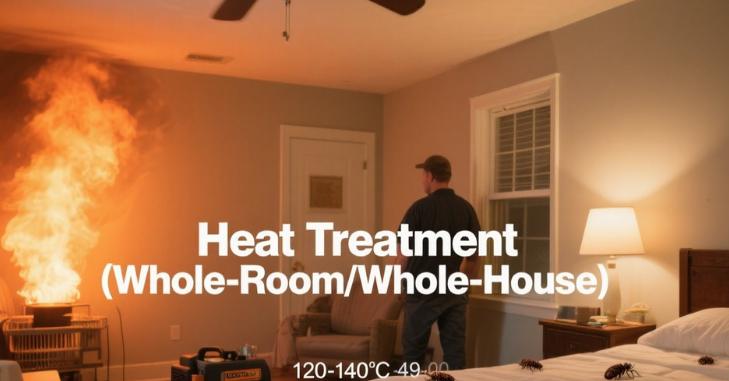
Heat treatment involves raising the indoor temperature to approximately 120–140°F (49–60°C) and maintaining that level for several hours to kill bed bugs at every life stage. Depending on the size of the space, costs can range from $800 to over $4,000, with most single-family homes averaging between $1,200 and $3,000.
3. Cryonite / CO₂ Freezing
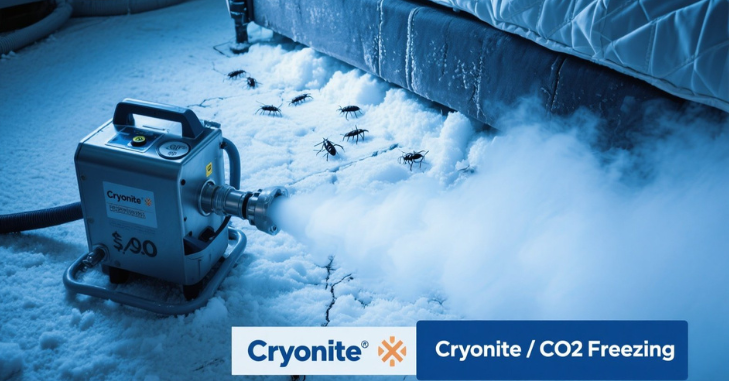
Cryonite treatment utilizes a rapid-release blast of carbon dioxide snow to instantly freeze and kill bed bugs exposed in cracks and crevices. This is usually offered as an add-on procedure rather than a standalone solution and typically costs an additional $200 to $500 per area, depending on how it is paired with other treatments.
4. Steam Treatment
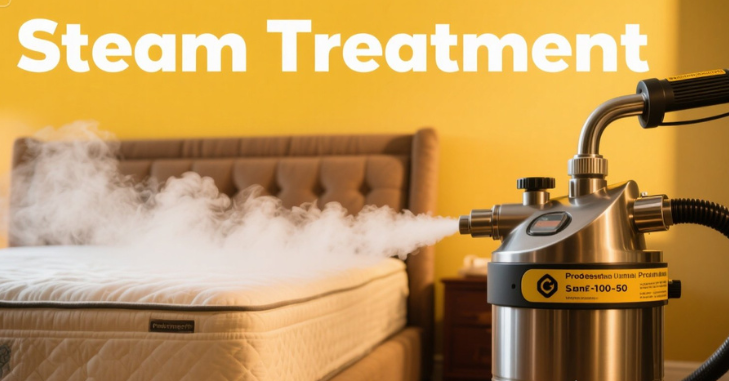
Steam treatment utilizes high-temperature steam to eliminate both live insects and their eggs in targeted areas, such as mattresses, bed frames, and upholstered furniture. The cost may be included in the overall service or charged separately, usually adding $100 to $300 if itemized. This method is especially appealing to those seeking chemical-free solutions and is effective on surface-level infestations.
5. Fumigation / Tent Fumigation
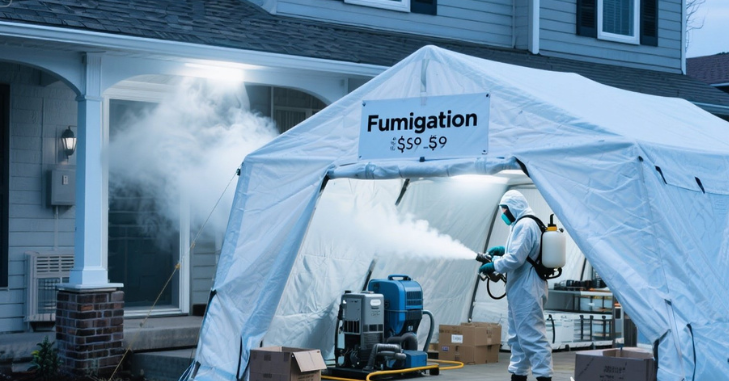
Fumigation, sometimes referred to as tenting, involves sealing off the entire structure and introducing a fumigant gas that penetrates deeply to eliminate bed bugs in all life stages. This approach usually costs between $1,500 and $5,000 or more for single-family homes, with prices increasing for multi-unit buildings due to logistical demands.
6. Integrated Pest Management (IPM)
Integrated Pest Management focuses on a customized combination of inspection, sanitation, monitoring, targeted chemical application, steam or heat treatment, and scheduled follow-ups. Because each plan is tailored to the severity of the infestation and the property type, costs vary widely, typically ranging from $300 to over $3,000.
Typical professional price ranges (by property & severity)
Use this as a rough guide for budgeting. Prices vary by region and provider.
| Scenario | Typical cost range (USD) | Notes |
| Single-bedroom, light infestation | $200 – $600 | Usually, chemical treatment + encasements |
| Single-bedroom, moderate infestation | $400 – $1,000 | May include multiple visits or steam |
| Whole apartment (1–2 BR) | $600 – $1,800 | Combination treatments common |
| Single-family home (whole-house) | $1,200 – $4,000+ | Heat or combination treatments are often required |
| Multi-unit building (per unit) | $500 – $2,500 per unit | Management-level eradication is more complex |
| Tent fumigation (whole house) | $1,500 – $5,000+ | Includes tenting and vacating costs |
Hidden costs and add-ons to watch for
Treatment price is rarely the whole story. Expect these possible extras:
- Follow-up visits: Some companies include 30–90 day follow-ups; others charge $50–$200 per visit.
- Replacement or disposal: Severely infested mattresses or furniture may need disposal—budget $100–$1,000 for replacements.
- Laundering and storage: Off-site laundering at a service or laundromat adds fees ($10–$50+).
- Preparation labor: If you hire labor to move furniture or prep rooms, costs climb ($50–$150/hour).
- Guarantees and warranties: A 30–90 day warranty may be included; extended guarantees, which cost more, provide added peace of mind.
- Travel or emergency fees: After-hours or emergency responses often incur additional charges.
Ask providers to detail these items in a written estimate so there are no surprise bills.
How to choose a treatment? And save money without skimping
- Obtain multiple written estimates (ideally three): Compare methods, guarantees, and explicit line items.
- Prioritize integrated plans: Single-method approaches sometimes fail. Combining targeted chemical treatment with mattress encasements and regular monitoring is often the most cost-effective approach.
- Ask about guarantees: A reputable company will offer a clear re-treatment policy and timeline.
- Check credentials and reviews: Licensing, insurance, and local references matter. Online reviews are helpful, but they filter out obviously fake or extreme reviews.
- Prep yourself: Proper preparation (decluttering, laundering, sealing items) reduces labor time and may lower costs.
- Negotiate bundled rates: If multiple units require service, request per-unit discounts.
- Prevent re-infestation: Use encasements, interceptors, and routine monitoring to avoid future big bills.
Insurance, renters, and landlord responsibilities
Most homeowner’s insurance policies do not cover pest-related damage, including bed bug infestations, although there are rare exceptions where certain incidental expenses may be covered under specific policy endorsements. For renters and landlords, responsibilities often depend on local laws and housing regulations.
In many jurisdictions, landlords are required to arrange and pay for treatment in multi-unit buildings; however, tenants must be able to demonstrate that they reported the infestation promptly and adequately. It’s important to document all communication in writing to avoid disputes. If you are a tenant, it is essential to consult with your landlord before hiring a pest control service.
Cost-saving tips that don’t compromise effectiveness
- Act quickly: Early treatment is often more cost-effective.
- Contain and isolate: Use encasements and interceptors to slow the spread while you arrange treatment.
- Bundle services: Treat multiple problem areas in one visit.
- Do your own prep work: Launder and declutter to reduce technician time charges.
- Shop for seasonality: Demand may influence pricing, and flexible scheduling can sometimes lower costs.
- Invest in quality encasements: They pay off long-term by protecting mattresses and box springs (common refuges).
Preventing Future Bed Bug Infestations
One important aspect often overlooked after treatment is preventing future infestations. Bed bugs can be reintroduced into a home through luggage, secondhand furniture, clothing, or even neighboring units in apartment buildings. Homeowners and renters should regularly inspect mattresses, bed frames, and upholstered furniture for early signs of activity.
Using protective mattress encasements, reducing clutter, and carefully checking used furniture before bringing it indoors can significantly reduce the risk of recurrence. Regular monitoring and prompt action at the first sign of bed bugs can help avoid costly extermination expenses and keep your home pest-free in the long term.
Conclusion
Realistically, plan for $300–$1,500 for most typical apartment treatments and $1,200–$4,000+ for whole-house or severe infestations. Add potential hidden costs and replacement expenses as needed. Your best value often comes from a professional who employs an integrated approach, offers an explicit guarantee, and collaborates with you on preparation and prevention.
If money is tight, combine smart DIY containment with a targeted professional visit. If your timeline allows, request multiple bids and thoroughly check references. In the end, a fast and effective response saves money—and sleep—over the long term.
Want to know about Choosing the Best Artificial Grass for Your Yard Check out our New Construction Homes category.
FAQs
It’s unlikely that a single treatment method (especially chemical-only) will eradicate a moderate to heavy infestation. Heat treatments and complete fumigation have higher single-visit kill rates; however, follow-ups are often necessary.
Some methods reduce visible activity quickly; however, eggs may hatch later. Expect monitoring and at least one re-check within 2–6 weeks.
Disposal is costly and often unnecessary if encasements and proper protocols are used. Disposing of items can also risk spreading bugs during the removal process.
Heat treatments require checking the tolerances of sensitive electronics and sealed items to ensure they meet the required specifications. Reputable technicians know how to protect valuables; ask for specifics.

