
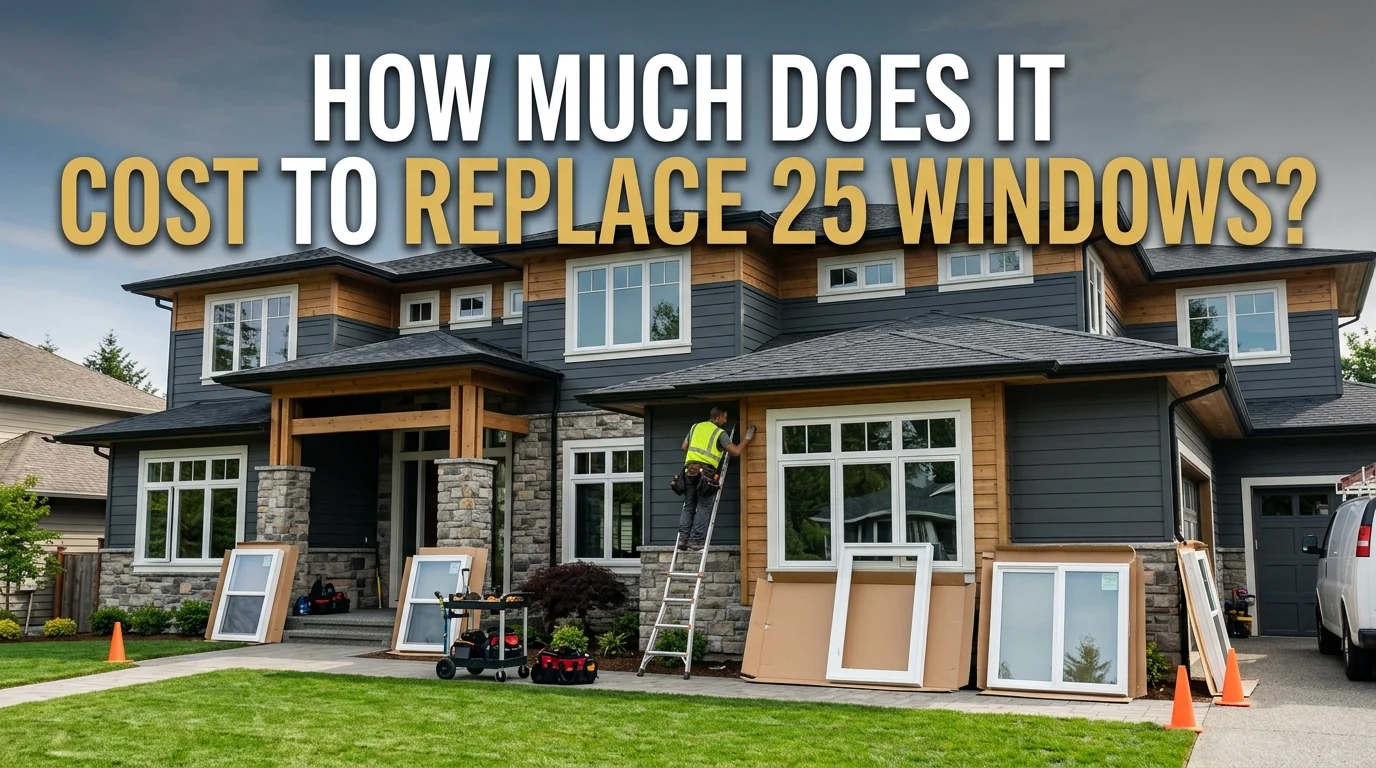
Replacing 25 windows in the United States can cost about $11,250 to $37,500. Many standard whole-house projects fall closer to $18,000 to $20,000. Your final price depends on window material, style, glass, installation method, labor rates, and the condition of the existing frame.
Quick answer: How much does it cost to replace 25 windows? A practical 2026 U.S. budget is roughly $11,250 to $37,500 installed. Standard vinyl or double-hung replacements often land near the middle. Premium materials, custom openings, structural repairs, impact glass, and full-frame installation can move the project toward the upper end.
| Cost factor | 2026 planning figure |
|---|---|
| Lower-cost 25-window project | About $11,250 |
| Midrange example at $750 each | About $18,750 |
| Common 25-window benchmark | About $18,000–$20,000 |
| Higher-cost 25-window project | About $37,500 |
| Broad installed cost per window | Roughly $450–$1,500+ |
| Main price drivers | Material, style, glass, labor, installation method |
Current estimates vary because research methods and window specifications differ. HomeGuide places 25 single-hung replacements around $11,250 to $37,500. Angi lists a narrower $18,000 to $20,000 estimate for 25 standard professionally installed windows.
Key Takeaways
* Budget roughly $11,250 to $37,500 for 25 installed windows. * A midrange $750-per-window project equals about $18,750. * Vinyl generally costs less than premium wood or fiberglass options. * Full-frame work normally costs more than replacing windows inside sound existing frames. * Large or custom openings can raise both material and labor costs. * Get at least three itemized quotes using the same specifications. * Federal window tax credits available in earlier years ended for property placed in service after December 31, 2025.
How Much Does It Cost to Replace 25 Windows in 2026?
A useful starting budget is $450 to $1,500 per installed window for many common residential projects. Multiplying that range by 25 produces $11,250 to $37,500. Specialty windows can exceed these figures, so the range should guide planning rather than replace contractor quotes.
Several current sources point to a tighter middle range for standard projects. Angi estimates around $18,000 to $20,000 for 25 windows. NerdWallet also reports a similar average range for a 25-window replacement project.
The gap between those figures is useful rather than confusing. A house with standard openings and basic products differs greatly from one using premium frames or architectural windows. Comparing per-window specifications explains much more than comparing project totals alone.
25-Window Replacement Cost at Different Price Levels
A simple multiplication method helps you test contractor estimates quickly. Divide the total quote by 25 to find the effective installed cost per opening. Then compare that figure with the product, labor, trim, disposal, and repair work included.
| Installed price per window | Estimated total for 25 windows |
|---|---|
| $450 | $11,250 |
| $600 | $15,000 |
| $750 | $18,750 |
| $900 | $22,500 |
| $1,200 | $30,000 |
| $1,500 | $37,500 |
This method works best when every estimate covers the same scope. One contractor may include disposal, trim, caulking, and repairs, while another separates them. Ask each company to put those details in writing before comparing the final numbers.
What Changes the Cost of Replacing 25 Windows?
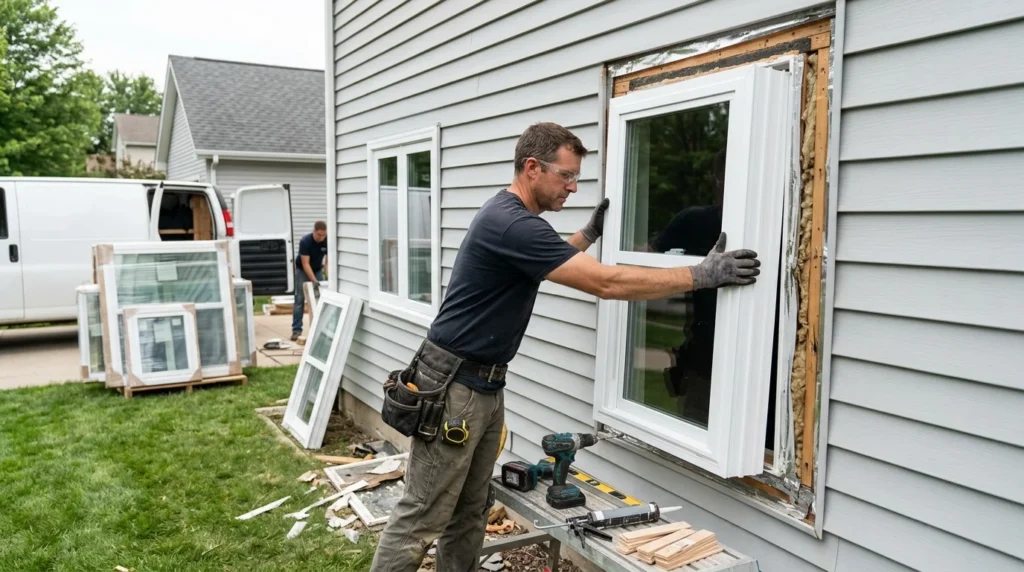
The number of windows matters, but product choices often create larger price differences. Frame material, glass packages, style, size, access, and installation method can change each unit’s installed price. A few expensive specialty openings can quickly raise the whole-house average.
Window Frame Material
Vinyl remains a common choice because it combines relatively accessible pricing with low maintenance. HomeGuide reports broad installed ranges from about $200 to $1,500 for vinyl. Fiberglass, composite, and wood can cost more depending on size and product quality.
Material should not be selected by price alone. Climate, appearance, maintenance expectations, and existing architecture should also guide the decision. Homlyst’s sustainable residential design coverage discusses how better windows support a more efficient building envelope.
Window Style and Size
A basic single-hung window generally costs less than a large bay or custom architectural unit. Casement, picture, sliding, double-hung, and specialty windows also use different hardware and installation methods. Larger openings usually require more material and may require extra handling.
Keep your window schedule beside every quote you receive. Each opening should show its dimensions, style, frame material, and glass package. That makes it harder for two contractors to present unlike products as equivalent offers.
Insert Replacement Versus Full-Frame Installation
An insert replacement keeps much of the existing frame in place. This approach can reduce labor when the old frame remains square, sound, and free from significant rot. It may also preserve more interior and exterior trim.
Full-frame replacement removes the existing window assembly more completely. It can expose hidden damage and allows contractors to correct certain flashing or frame problems. The added demolition, rebuilding, and finishing generally make this option more expensive.
Glass and Energy-Efficiency Upgrades
Double-pane glass is common in modern replacement projects. Low-emissivity coatings, gas fills, triple-pane units, laminated glass, and impact-resistant packages can increase the purchase price. The right choice depends heavily on climate and local performance requirements.
ENERGY STAR says qualifying windows use independently certified NFRC performance ratings. Required U-factor and solar heat gain performance vary by climate zone. ENERGY STAR also estimates certified windows can reduce heating and cooling costs compared with non-certified products.
Labor and Access
Labor costs vary across the country and within individual metro areas. Second-story openings, difficult landscaping, steep terrain, heavy units, and limited access can increase installation time. Rotten framing or damaged trim can also add work after old units are removed.
For broader home budgeting, Homlyst’s long-term maintenance guide treats windows and doors as important parts of the building envelope. That perspective matters when 25 replacements become part of a larger renovation budget.
How Long Does Replacing 25 Windows Take?
Physical installation usually moves faster than the purchasing process. Angi reports roughly 30 to 60 minutes of installation time per window under typical conditions. Ordering, manufacturing, scheduling, and custom work can extend the overall project timeline.
Twenty-five straightforward replacements may therefore require several crew days rather than several weeks of continuous work. Full-frame projects, repairs, difficult access, or trim finishing can extend the installation. Ask contractors to separate expected manufacturing lead time from the on-site installation schedule.
Weather can also affect exterior work. Rain, high winds, extreme temperatures, and unexpected structural damage can change the schedule. Your contract should explain how delays and newly discovered repairs will be handled.
Can Replacing All 25 Windows at Once Save Money?
Large projects can sometimes lower the effective cost per unit. Setup, delivery, measuring, sales, and crew mobilization costs get spread across more windows. Some installers also price larger projects differently from one-window service calls.
That does not mean every bulk quote is automatically a bargain. Calculate the total divided by 25, then review the exact products included. A lower per-window figure has little value if the quote removes needed flashing, trim, disposal, or warranty coverage.
Homlyst’s Window World review shows why local installation quality matters alongside price. It recommends comparing written specifications, warranties, and recent feedback from local installers before signing.
Costs That May Appear Outside the Window Price
Contractors sometimes advertise a window price that doesn’t cover the full project. A 25-opening job creates many opportunities for additional work. Your written estimate should clearly identify which charges are included.
Common extras may include the following.
* Old-window removal and disposal. * Interior or exterior trim replacement. * Sill or framing repairs. * Flashing and weatherproofing work. * Painting or staining. * Permit fees where required. * Difficult upper-story access. * Custom sizing. * Lead-safe work in applicable older homes. * Structural changes around enlarged openings.
Homes built before 1978 need special attention when painting disturbs surfaces. EPA rules cover window replacement performed by contractors when applicable lead-painted surfaces are involved. Homeowners should verify that required lead-safe practices and certifications are included in the scope.
Are There Federal Tax Credits for Replacement Windows in 2026?
Homeowners should be careful with articles that still advertise the former federal window credit. The IRS says the Energy Efficient Home Improvement Credit under Section 25C ended for property placed in service after December 31, 2025. That means a qualifying window installed in 2026 does not qualify for that former federal credit.
State, utility, manufacturer, or local incentives may still exist. Those programs can change by location and product requirements. Check current programs before assuming a rebate will reduce your final project cost.
Energy-efficient products can still have practical value without a federal credit. Better windows may improve comfort and reduce drafts when the old units perform poorly. Product ratings, installation quality, and climate suitability still matter more than a tax incentive alone.
How to Compare Quotes for 25 Windows
Start by asking three contractors to price the same window schedule. Give each company the same approximate sizes, styles, frame preferences, and glass requirements. Matching specifications makes the bids far easier to compare.
Then review each proposal line by line. Check product series, installation type, disposal, repairs, trim, warranties, payment schedule, and expected completion dates. Ask for written change-order pricing before work starts.
Finally, divide each complete quote by 25. A $17,500 proposal equals $700 per opening, while a $25,000 proposal equals $1,000. The difference becomes meaningful once you identify what the extra $300 per opening buys.
Ways to Keep a 25-Window Project Within Budget
Start with standard sizes and styles where they meet your needs. Custom shapes, oversized openings, premium wood finishes, and extensive structural changes tend to increase costs. Keeping the existing opening dimensions can also reduce unnecessary reconstruction.
Consider which windows need replacement most urgently. Prioritize failed seals, water intrusion, damaged frames, difficult operation, and major drafts. A phased project may make sense when replacing all 25 exceeds your current budget.
Don’t cut the installation scope just to reach a lower number. Poor flashing, sealing, or repair work can create expensive problems later. Homlyst’s fiber cement siding installation guide also shows how exterior cladding and weatherproofing details interact with the building envelope.
Is $20,000 a Reasonable Price for 25 Windows?
A $20,000 quote equals $800 per installed window. That figure sits close to several national 2026 cost benchmarks for ordinary replacement projects. It can therefore be a plausible price, depending on specifications and local labor costs.
Price alone cannot show whether the proposal offers good value. A basic insert product and a high-performance full-frame unit should not cost the same. Compare products, installation scope, warranties, and repair allowances before judging the total.
The strongest bid is usually the easiest one to audit. You should be able to see what each window costs and what installation includes. Vague package pricing makes meaningful comparisons harder.
Frequently Asked Questions
How much does it cost to replace 25 windows?
The broad 2026 U.S. planning range is about $11,250 to $37,500 installed. Several sources place standard 25-window projects closer to $18,000 to $20,000. Materials, sizes, local labor, glass, and installation method create the difference.
What is a reasonable cost per replacement window?
Many standard professionally installed units fall somewhere around $450 to $1,500 each. Current national studies also show averages around the middle of that broad range. Premium, custom, or unusually large units can cost considerably more.
Is it cheaper to replace all windows at once?
A larger project may reduce some per-window costs because crews and equipment are already on site. Contractors may also offer volume pricing on larger orders. Compare the effective installed price rather than assuming a package discount always saves money.
Does window replacement increase home value?
New windows can improve appearance, comfort, operation, and energy performance. The financial return depends on the home’s condition, the local market, and replacement costs. Treat resale value as one benefit rather than assuming the project will fully repay itself.
Should I replace windows or repair them?
Repair can make sense when frames remain sound and the problem involves hardware or limited components. Replacement becomes more attractive when frames are deteriorated, seals repeatedly fail, or performance remains poor. A qualified installer can help determine whether damage extends beyond the visible window.
The Bottom Line
For a U.S. homeowner planning a 25-window project in 2026, a defensible broad budget range is $11,250 to $37,500. A standard project around $18,000 to $20,000 is also consistent with multiple current cost guides. Your specifications and installation conditions determine where your home lands inside that range.
Get at least three itemized estimates before signing a contract. Make every contractor price the same window schedule and installation scope. Then compare the effective cost per opening, warranties, repairs, and product performance instead of choosing by headline price alone.
