

A Generator transfer switch installation connects a backup generator to selected home circuits or the whole-home electrical system through equipment that prevents utility and generator power from feeding the panel simultaneously. A licensed electrician should size the equipment, complete the panel work, verify grounding and bonding, and test the changeover before use.
For homeowners, the useful work happens before and after the electrical installation. You can define the loads you need, choose the right system type, prepare for the electrician, and confirm that the finished setup operates safely.
| Key point | What homeowners should know |
|---|---|
| Main purpose | Safely changes a home’s electrical supply between utility and generator power |
| Manual option | Common with portable generators and selected backup circuits |
| Automatic option | Common with permanently installed standby generators |
| Typical 2026 installation cost | Many professional projects fall around $1,200 to $1,600 |
| Published equipment and installation ranges | About $400 to $1,300 for manual systems; $600 to $2,500 for automatic systems |
| Typical installation time | Around 2 to 4 hours for straightforward projects |
| Who should perform panel work? | A qualified, licensed electrician |
| Main hazard avoided | Backfeeding electricity into utility lines |
Current cost data from Angi and HomeGuide shows wide ranges because switch type, panel condition, circuit count, permits, and other electrical work can change the final price.
What a Transfer Switch Does and Why It Matters
A transfer switch creates a controlled way to separate utility power from generator power. That separation matters because an improperly connected generator can send electricity back through utility lines.
OSHA’s generator safety guidance warns against connecting a generator directly to a building’s electrical system unless a qualified electrician has installed appropriate switching equipment. NFPA’s standby-system requirements also call for interlocking or transfer equipment that prevents unintended connections between power sources.
This is why plugging a portable generator into a household outlet to energize a home is unsafe. CPSC specifically warns against this form of backfeeding because it can create an electrocution hazard. If you’re still deciding what type of backup power system suits your home, Homlyst’s home generator installation guide covers the broader generator-planning process.
Manual vs. Automatic: Choose Before You Size the Project
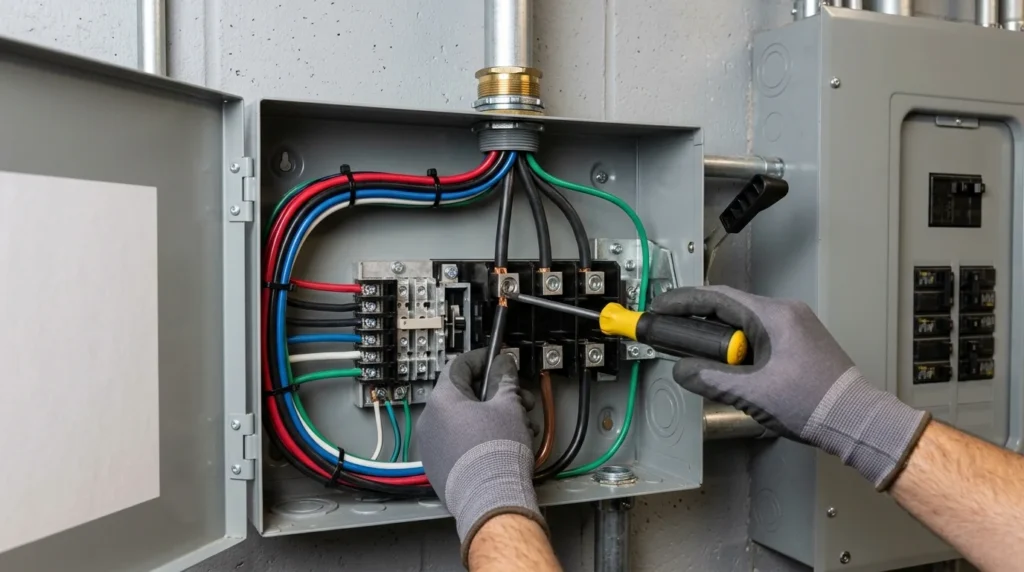
The right setup depends mainly on the generator you own and how you expect to use backup power.
| Feature | Manual system | Automatic system |
|---|---|---|
| Typical generator | Portable | Permanently installed standby unit |
| Changeover | Homeowner operates it | System detects an outage and changes power sources |
| Best fit | Selected essential circuits | Whole-home or larger standby loads |
| Typical 2026 installed range | $400 to $1,300 | $600 to $2,500 |
| Outage operation | Someone must be present | Designed for automatic response |
The published price ranges overlap because electrical panels and project scopes differ. A simple manual setup may cost far less than a service that needs additional panel work.
A portable generator owner who only needs a refrigerator, lights, furnace controls, and a few outlets may prefer manual operation. A homeowner who wants power restored without being present may need a standby generator with automatic switching.
What You’ll Need Before Installation Day
Preparing accurate information helps an electrician size the project without guessing.
| Bring or confirm | Why it matters |
|---|---|
| Generator make and model | Confirms output and manufacturer requirements |
| Main electrical panel rating | Helps determine compatible equipment |
| List of essential loads | Defines which circuits need backup |
| Generator owner’s manual | Provides connection and operating requirements |
| Proposed generator location | Affects inlet location and cable routing |
| Local permit requirements | May affect timing, inspection, and cost |
Don’t choose electrical equipment only by matching a number printed on the generator. The electrician needs to consider the service, intended loads, switching design, listed equipment, and manufacturer requirements. UL 1008 covers transfer equipment used in emergency and optional standby systems. Manufacturer instructions also require installations to comply with applicable national and local electrical rules.
Generator Transfer Switch Installation: 7 Safe Stages
- Define the loads that need backup. Decide which appliances and circuits matter during an outage. Prioritize refrigeration, lighting, heating controls, medical needs, pumps, or other essential loads before discussing equipment size.
- Choose manual or automatic operation. Match the switching method to the generator and how the household will use it. Portable units commonly pair with manual systems, while fixed standby units often use automatic equipment.
- Confirm equipment compatibility. Your electrician should check generator output, service characteristics, panel condition, selected loads, manufacturer instructions, and the ratings of all proposed equipment.
- Handle permits before electrical work begins. Requirements vary by jurisdiction. Ask the electrician whether the quote includes the electrical permit, inspection, and any utility coordination required by your location.
- Establish the generator connection point. For portable systems, the project may include an exterior power inlet. Permanently installed generators use a fixed connection designed for that system. This work should follow the manufacturer’s listed configuration.
- Have the electrician complete panel integration. This is the high-risk stage. The professional installs the switching equipment, makes the required source and load connections, and verifies grounding, bonding, overcurrent protection, and source isolation. Manufacturer guidance warns that hazardous voltage may be present and calls for qualified installation.
- Commission and label the finished system. The electrician should test a simulated outage, generator operation, source changeover, selected loads, and the return to utility power. Ask for operating instructions and clear labels before considering the job finished.
A well-documented commissioning test is worth requesting in writing. It gives you a repeatable operating reference, rather than requiring you to rely on memory months later.
What Does Installation Cost in 2026?
Angi’s August 2026 cost data puts many professional projects around $1,200 to $1,600, with an average near $1,450. Its broader ranges run from about $400 to $1,300 for manual systems and $600 to $2,500 for automatic systems. Straightforward work often takes about two to four hours. Older panels, added circuits, service changes, difficult cable routes, or permit delays can increase both time and cost.
Ask for a quote that separates equipment, labor, inlet hardware, panel modifications, permits, inspection, labeling, and testing. Homeowners budgeting for other major systems can also use Homlyst’s guidance to plan for long-term home maintenance costs.
Safe Generator Use After the Electrician Leaves
Correct electrical installation is only part of safe backup-power use. A portable generator also produces carbon monoxide. CPSC winter storm safety guidance advises operating portable generators outside and at least 20 feet from the home, with the exhaust directed away from the building. It also recommends working carbon monoxide alarms on every level and outside sleeping areas.
Follow the operating sequence provided by your electrician and the generator manufacturer. Don’t assume another home’s procedure applies to yours. Stop using the system if you notice damaged connectors, overheating, repeated breaker trips, unusual odors, or equipment that doesn’t change power sources as expected.
Have a qualified professional inspect the problem before the next outage. Backup power can also form part of a wider resilience plan. Homlyst’s discussion of resilient residential design provides useful context for homeowners considering more than a single emergency system.
Plan the Job Before You Buy the Hardware
Start with your generator model, electrical panel information, and a short list of the circuits you need during an outage. Then ask a licensed electrician for a written scope covering compatible equipment, permits, installation, testing, and final labeling. That approach gives you a safer system and a clearer price before electrical work begins.
Frequently Asked Questions
Panel-side installation is not a good DIY project for most homeowners. It involves hazardous electrical equipment and must prevent incorrect connections to utility and generator sources. Trade guides consistently rate the work as difficult and recommend an experienced, licensed electrician.
Often, yes, though requirements depend on your city or county. Angi reports permit costs commonly range from about $50 to $350. Confirm the actual requirement with your local authority or electrician before work starts.
There isn’t one universal size. The correct rating depends on your generator, electrical service, switching design, planned backup loads, panel configuration, and the equipment manufacturer’s requirements. Have the installer verify compatibility before purchasing hardware.
A straightforward project commonly takes about two to four hours. Panel upgrades, added circuits, difficult routing, permitting, or inspection requirements can extend the job.
Neither is automatically better. Manual operation generally makes sense for portable generators and selected loads. Automatic switching is better suited to permanently installed standby systems where unattended outage response matters.

