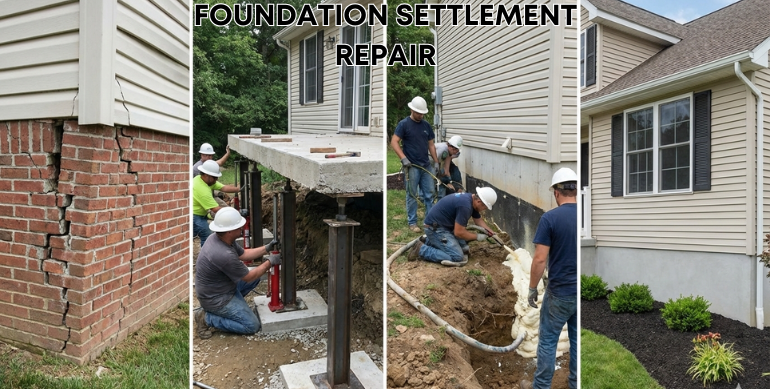
Foundation settlement repair is one of the most critical structural concerns a property owner can face. Whether you own a residential home or a commercial building, the foundation is the backbone of the structure. When it begins to settle unevenly, it can lead to cracks, sloping floors, sticking doors, plumbing issues, and even serious structural instability.
This comprehensive guide to foundation settlement repair covers causes, warning signs, prevention strategies, professional repair methods, and a detailed cost breakdown. By understanding how settlement occurs and how it can be corrected, homeowners can protect their investment and ensure long-term structural safety.
| Category | Key Points | Notes |
| Causes | Expansive soils, poor drainage, plumbing leaks, tree roots, and poor construction | Early detection reduces damage. |
| Risks of Delay | Structural instability, plumbing issues, lower property value, higher repair costs, and safety hazards | Prompt repair is essential. |
| Prevention | Proper drainage, soil moisture management, regular inspections, and careful landscaping | Reduces the need for expensive repairs |
| DIY vs Professional | DIY: Cosmetic fixes, risk of worsening damage Pro: Structural expertise, specialized equipment, warranties, soil testing | Professionals ensure long-term stability |
| Post-Repair Monitoring | Stabilized cracks, level floors, functional doors/windows, no new movement | Ensures lasting results |
| Cost Estimates | Minor cracks: £200–£500 Piering/underpinning: £5,000–£20,000 Full replacement: £25,000+ | Depends on severity and method |
Understanding Foundation Settlement
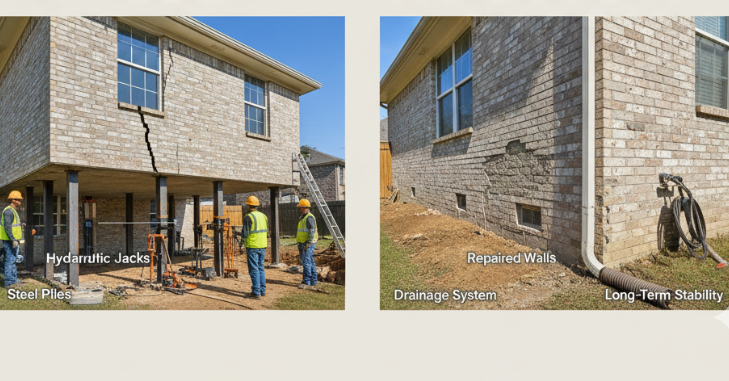
Foundation settlement occurs when the soil beneath a structure shifts, compresses, or erodes, causing the building to sink or tilt unevenly. Minor settlement is common after construction, but excessive or uneven movement requires professional foundation settlement.
Types of Foundation Settlement
- Uniform Settlement
- Occurs evenly across the structure
- Rarely causes major structural damage
- Differential Settlement
- One portion of the foundation sinks more than others
- Leads to cracks and structural distortion
- Requires immediate foundation settlement repair
Common Causes of Foundation Settlement
Understanding the causes of foundation settlement is essential for preventing and promptly repairing it.
1. Soil Composition
Expansive clay soils are a major contributor to foundation problems because they shrink during dry conditions and swell when wet. This continuous expansion and contraction put pressure on the foundation, causing movement over time. Additionally, loose or poorly compacted soil beneath a structure can compress under the building’s weight, causing uneven settlement that may eventually require professional repair.
2. Poor Drainage
Improper drainage around a property significantly weakens soil stability. When water pools around the foundation, it saturates the soil, reducing its load-bearing capacity. Mismanaged gutters and short downspouts can accelerate erosion, washing away supporting soil and increasing the risk of structural settlement.
3. Plumbing Leaks
Underground plumbing leaks are often hidden but highly damaging. Escaping water softens the surrounding soil, creating voids or weak spots beneath the foundation. Over time, this can lead to uneven settlement, particularly under slab foundations, making early detection and repair essential.
4. Tree Roots
Tree roots naturally seek moisture and can draw significant amounts of water from the soil surrounding a foundation. This moisture extraction leads to soil shrinkage, especially in clay-heavy regions, causing gaps beneath foundation edges and contributing to uneven structural movement.
5. Inadequate Construction Practices
Poor construction techniques also play a major role in settlement issues. If soil is not properly compacted before building begins, it may shift or compress after the structure is completed. Likewise, a foundation design that does not match the soil type or environmental conditions increases the likelihood of long-term structural problems.
Warning Signs You Need Foundation Settlement Repair
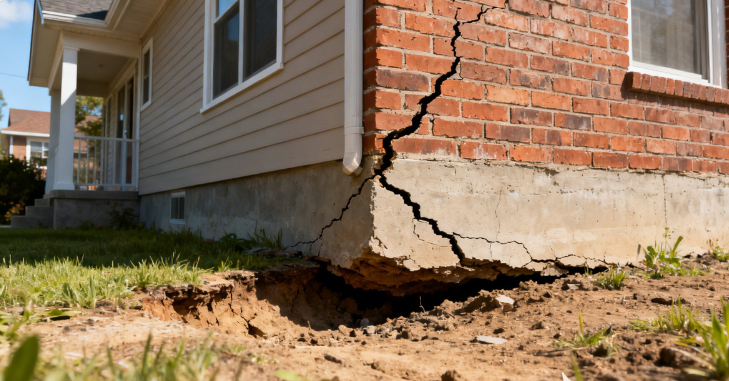
Early detection reduces repair costs and prevents severe structural damage.
Interior Warning Signs
- Cracks in walls or ceilings
- Uneven or sloping floors
- Doors and windows are sticking
- Gaps between walls and floors
Exterior Warning Signs
- Cracks in brickwork
- Leaning chimney
- Separation between walls and foundation
- Visible foundation cracks
Ignoring these signs can lead to escalating damage and higher costs for foundation settlement repair.
The Importance of Immediate Foundation Settlement Repair
Delaying foundation settlement repair can lead to serious consequences for both the structure and the homeowner. As the foundation continues to shift, structural instability may worsen, affecting walls, floors, and ceilings throughout the property.
Plumbing lines can crack or disconnect due to uneven movement, resulting in leaks and additional water damage. Over time, unresolved foundation issues significantly reduce property value and make homes harder to sell. Repair costs also tend to increase as minor issues escalate into major structural issues.
In severe cases, ongoing settlement can pose safety hazards to occupants. Because a stable foundation supports the entire structure, taking prompt action is essential to prevent secondary damage and protect long-term investment.
Professional Foundation Settlement Repair Methods
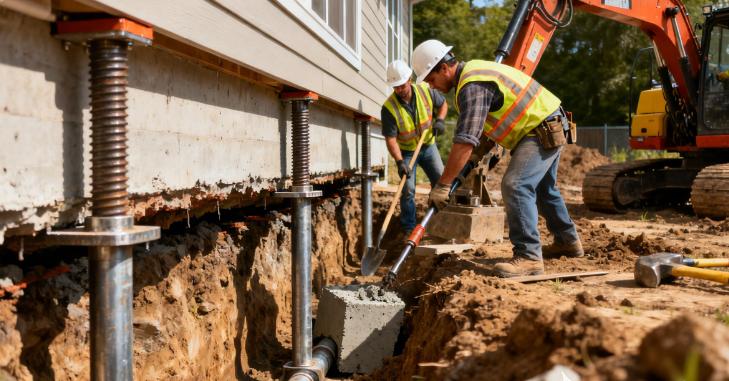
Professional contractors use advanced engineering techniques to correct foundation settlement. The chosen method depends on soil conditions, foundation type, and the severity of damage.
1. Helical Piers
Helical piers are steel shafts with screw-like blades installed deep into stable soil layers.
Benefits
- Minimal excavation
- Suitable for light structures
- Long-lasting solution
- Immediate load-bearing capability
Helical piers are widely used in foundation settlement repair for residential properties.
2. Push Piers (Resistance Piers)
Push piers are hydraulically driven steel pipes that extend to load-bearing soil or bedrock.
Advantages
- Suitable for heavy structures
- Permanent structural support
- Can lift the foundation back to its original position
Push piers are a common method in large-scale foundation settlement repair projects.
3. Slab Jacking (Mudjacking)
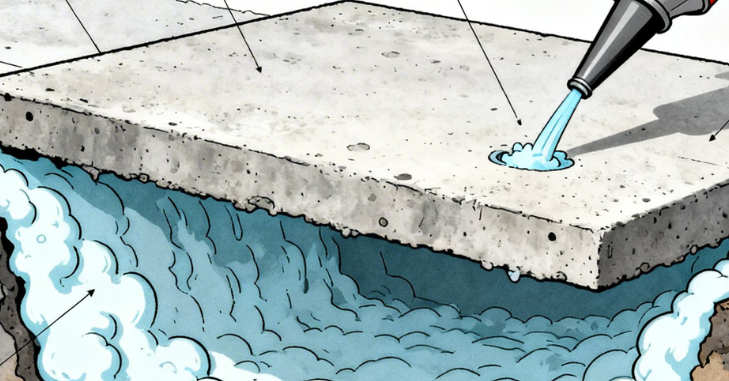
This method involves injecting grout beneath the slab to lift it.
Best For
- Minor settlement
- Concrete slab foundations
- Driveways and sidewalks
It is less invasive but may not address deep soil instability.
4. Polyurethane Foam Injection
Expanding foam is injected beneath the slab to lift and stabilize it.
Benefits
- Quick curing time
- Lightweight material
- Minimal disruption
This modern method is increasingly popular in foundation settlement repair.
5. Underpinning
Underpinning strengthens existing foundations by extending them deeper into stable soil.
Used For
- Severe structural settlement
- Older buildings
- Commercial structures
Prevention Tips for Foundation Settlement
Maintain Proper Drainage
Install functional gutters and extend the downspouts 5–10 feet from the foundation to ensure water is safely directed away from the structure. Properly grade the soil so it slopes away from the home, preventing water from pooling near the base and weakening the supporting soil.
Manage Soil Moisture
Avoid overwatering landscaping, as excessive moisture can cause soil expansion. During droughts, use soaker hoses to maintain consistent moisture levels around the foundation, preventing soil shrinkage and uneven settling.
Regular Inspections
Schedule an annual structural inspection to assess foundation stability. Monitor cracks for any signs of growth or widening, and routinely check plumbing systems for hidden leaks that could soften the soil beneath the structure.
Landscaping Control
Plant trees at a safe distance from the foundation to prevent roots from absorbing moisture near the structure. Avoid planting deep-rooted vegetation near the home, as aggressive root systems can disrupt soil balance and contribute to settlement.
Cost Breakdown
Costs vary depending on severity, foundation type, and chosen repair method.
Below is a general cost overview:
| Repair Method | Average Cost Range | Best For |
| Slab Jacking (Mudjacking) | $500 – $1,500 | Minor slab settlement |
| Polyurethane Foam Injection | $1,000 – $2,500 | Lightweight slab repair |
| Helical Piers | $1,500 – $3,000 per pier | Residential foundation support |
| Push Piers | $1,000 – $3,000 per pier | Heavy structural lifting |
| Underpinning | $3,500 – $10,000+ | Severe settlement cases |
Factors Influencing Cost
- Severity of settlement
- Number of piers required
- Soil condition
- Accessibility of the repair site
- Local labor rates
The total cost of foundation settlement repair can range from $2,000 to over $25,000 for extensive structural corrections.
DIY vs Professional Foundation Settlement Repair
| Aspect | DIY Approach | Professional Foundation Settlement Repair |
| Scope of Work | Temporary crack sealing | Comprehensive structural correction |
| Effectiveness | Cosmetic fixes only | Addresses the root cause of settlement |
| Risk Level | High risk of worsening damage | Engineered and safety-compliant solutions |
| Expertise | No structural training | Structural engineering expertise |
| Equipment | Basic household tools | Specialized hydraulic and diagnostic equipment |
| Soil Analysis | None | Soil testing and load calculations |
| Warranty | No guarantee | Warranty-backed repairs |
| Long-Term Stability | Short-term relief | Ensures long-term foundation stability |
Long-Term Benefits of Foundation Settlement Repair
- Increased property value
- Structural safety
- Reduced future repair costs
- Improved resale potential
- Peace of mind
A repaired foundation protects the entire building system.
Different Foundation Types
Slab Foundations
- Often repaired with slab jacking or piers
Crawl Space Foundations
- May require pier installation and beam reinforcement
Basement Foundations
- Often need underpinning and waterproofing
Each structure demands a tailored foundation settlement repair plan.
Choosing the Right Foundation Settlement Repair Contractor
Before hiring, ensure:
- Licensed and insured contractor
- Structural engineer consultation
- Written estimate and warranty
- Strong customer reviews
- Transparent pricing
Proper contractor selection determines repair success.
Signs Your Repair Was Successful
After foundation repair, homeowners should observe stabilized cracks that no longer widen, level floors without noticeable sloping, and doors and windows that open and close properly without sticking. Additionally, there should be no signs of new structural movement such as fresh wall separations or shifting gaps. Ongoing monitoring after the repair process is essential to ensure the foundation remains stable and the results are long-lasting.
Conclusion
Foundation settlement repair is not just a construction service; it is a crucial investment in structural safety and property longevity. From understanding soil behavior to selecting the appropriate professional repair method, homeowners must take settlement issues seriously.
With proactive prevention strategies, early detection, and expert intervention, foundation settlement repair can restore stability and protect your property for decades. While costs may seem significant initially, the long-term value far outweighs the risks of ignoring structural movement. A stable foundation ensures peace of mind, safety, and the preservation of property value. When it comes to foundation settlement, timely action and professional expertise make all the difference.
Want to know about Fiber Cement Siding Installation: Complete Guide for Homeowners on Costs, Tools, Materials, Step-by-Step Process, Benefits, and Maintenance Tips Check out our New Construction Homes category.
FAQs
Signs of successful repair include stabilized cracks, level floors, properly functioning doors and windows, and no new structural movement.
Costs vary based on severity: minor cracks (£200–£500), piering/underpinning (£5,000–£20,000), full foundation replacement (£25,000+).
Professional methods include underpinning, piering, slab jacking, and wall reinforcement. These approaches stabilize the foundation and prevent future movement.
Delaying repairs can lead to structural instability, plumbing damage, decreased property value, higher repair costs, and safety hazards.