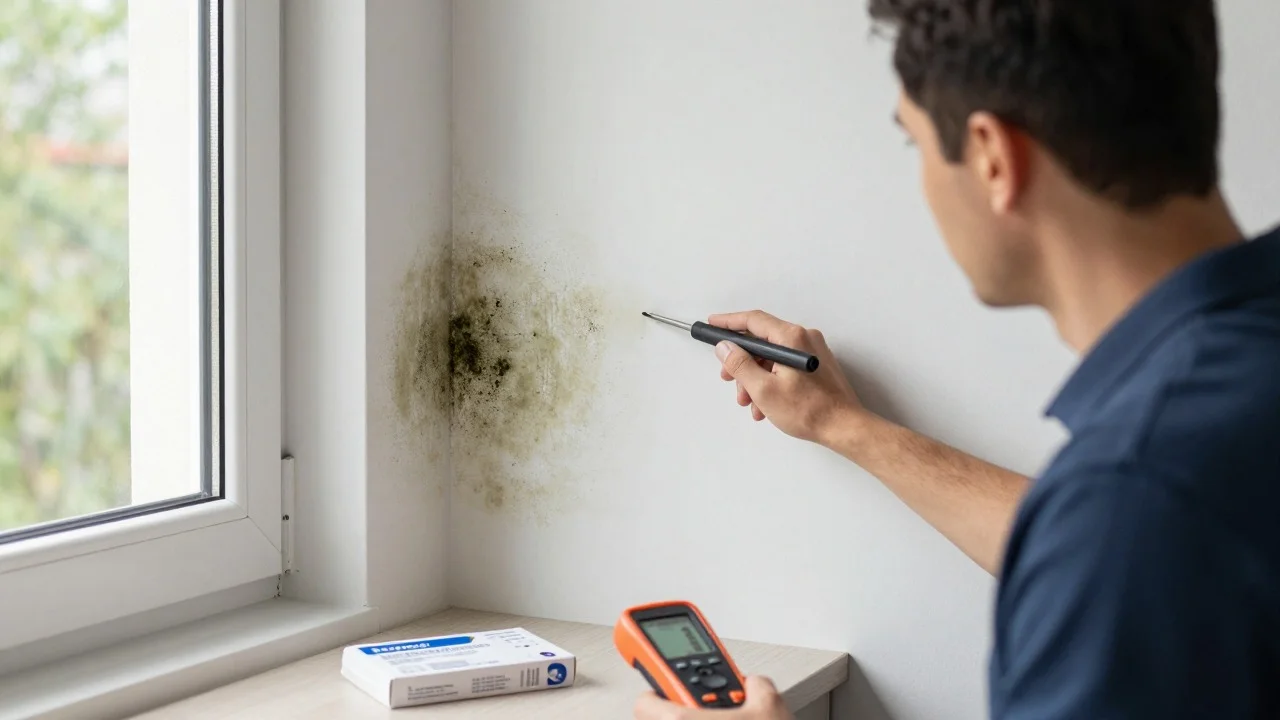
A black mold test can identify or sample suspected mold, but it usually isn’t the first step when growth is already visible. EPA and CDC guidance says visible mold should be removed and the moisture source should be fixed. Testing is most useful for hidden growth, disputed findings, or post-remediation verification.
The color of a mold patch also doesn’t tell you whether the mold poses a specific health risk. The CDC says you generally don’t need to identify the type of mold before dealing with the moisture problem and removing the growth.
| Situation | Is testing useful? | Best next step |
|---|---|---|
| Mold is clearly visible | Usually not | Find the moisture source and address the growth |
| Musty odor but no visible source | Sometimes | Inspect for hidden dampness; consider professional help |
| Recent water damage | Sometimes | Check damp or concealed materials |
| Cleanup has been completed | Sometimes | Sampling may help verify that an area was cleaned |
| You need formal documentation | Often | Use a qualified mold professional with a documented method |
| You have unexplained health symptoms | Testing doesn’t diagnose illness | Address dampness and discuss symptoms with a healthcare professional |
EPA guidance on mold testing and sampling states that there are no federal limits for airborne mold or mold spores. That means a sample result isn’t a simple pass-or-fail score indicating whether a house is “safe.”
What a mold test can and can’t tell you
A home mold test can show that mold or spores were present in a particular sample. Depending on the method, a laboratory may also identify the types of mold found. What the result cannot do is establish a universal safe exposure level.
That distinction matters because mold spores are common in indoor and outdoor environments. A result needs context, including where the sample was taken, the sampling method, moisture conditions, and whether visible growth is present. EPA recommends that sampling, when needed, be handled by someone who understands sampling protocols and how to interpret the results.
The same caution applies to Stachybotrys chartarum, which is often called toxic or black mold. CDC describes it as a greenish-black mold associated with persistently wet cellulose materials. The agency also says it isn’t necessary to determine which mold species is growing before taking corrective action.
When a black mold test is useful

Testing makes the most sense when the answer will change what you do next. If a wall already has obvious fungal growth beside a leaking pipe, a kit adds little to the basic decision. You still need to stop the leak and address the affected material.
Hidden growth after water damage
A persistent musty odor without visible growth can justify a closer investigation. Mold may develop inside wall cavities or other concealed areas after plumbing problems, roof leaks, or flooding. Health Canada notes that professional air testing can sometimes help when hidden mold remains a concern after a history of water intrusion.
This is also why moisture prevention matters as much as testing. Homlyst’s guidance on preventative plumbing maintenance explains how hidden leaks can lead to water damage and mold when they go unnoticed.
Checking after remediation
EPA says surface sampling may sometimes help determine whether an area has been adequately cleaned after mold removal. That is different from casually testing the air to find a universal “safe” mold level because no federal threshold exists for that purpose.
If you still need a black mold test after remediation, professional sampling is easier to interpret when you have a clear reason for collecting each sample.
DIY mold testing methods compared
Home-testing products use several methods, and they don’t all provide the same information. Consumer kits may use exposed culture plates, surface swabs, tape samples, or samples sent to a laboratory.
| Method | What it samples | Main limitation |
| Surface swab or tape | Growth on one surface | Says little about areas you didn’t sample |
| Settle or culture plate | Spores that land on the medium | Doesn’t measure a health-based exposure limit |
| Consumer air kit | Air at a particular place and time | Conditions can change, and results need context |
| Professional air sampling | Controlled indoor and sometimes outdoor samples | Costs more and still requires expert interpretation |
| Professional inspection | Building conditions, moisture, and suspected growth | May include sampling only when it serves a clear purpose |
A DIY kit may satisfy curiosity, but lab analysis is more useful when species identification is genuinely needed. Even then, identification doesn’t replace moisture control or remediation.
How to check your home in 5 steps
Before buying a kit, use a simple process to decide whether sampling will provide useful information.
- Look for moisture first. Check plumbing fixtures, basement walls, windows, roofing trouble spots, and areas affected by past leaks.
- Inspect for visible growth and musty odors. If mold is already obvious, testing usually doesn’t change the first response.
- Ask whether a result will change your decision. Don’t collect a sample merely to confirm what you can already see.
- Choose a suitable method if testing has a purpose. Use professional sampling when documentation or expert interpretation matters.
- Fix the moisture source and deal with the growth. Testing alone doesn’t stop mold from returning.
CDC recommends keeping indoor humidity at no more than about 50% when possible. It also advises fixing plumbing, roof, and wall leaks and drying wet materials promptly after water intrusion.
Basements deserve special attention because groundwater and foundation moisture can create recurring damp conditions. Homlyst’s guide to basement waterproofing options covers approaches for reducing water intrusion below grade.
How to read mold test results without overreacting
A positive result doesn’t automatically mean a home has reached a dangerous exposure threshold. EPA and NIOSH say there are no health-based federal standards for mold concentrations in indoor air.
A negative result also shouldn’t override clear evidence from the building. Sampling captures conditions at particular locations and times, while concealed moisture can remain elsewhere. If odors, stains, repeated leaks, or damp materials persist, investigate the moisture source instead of treating one sample as definitive.
Environmental mold testing also isn’t a medical diagnostic test. CDC notes that people in damp buildings may experience respiratory or allergic effects, but a home sample cannot establish the cause of an individual’s symptoms.
What to do after you find mold
Start with the water source. A cleaned wall can develop mold again when a pipe continues to drip, groundwater keeps entering, or a bathroom stays humid after every shower.
For bathrooms, better airflow can help manage moisture. Homlyst’s guide to bathroom ventilation and exhaust fans explains how ventilation helps control humidity in damp rooms.
Homes with recurring groundwater problems may need broader protection rather than repeated surface cleanup. Homlyst also covers water damage prevention measures for moisture entering from below ground level.
Large, recurring, concealed, or difficult-to-access mold problems are good reasons to involve a qualified professional rather than relying only on a consumer kit.
Your next step
If you can already see mold, don’t make a test kit your first purchase. Find the water source, stop the moisture, and determine whether the affected area is suitable for DIY cleanup or requires professional assessment. You may also want to read Mold in AC Unit.
If the suspected growth is hidden or you need documented results, choose an experienced mold professional. Ask them to explain why each sample is being collected and how the laboratory results will affect your next decision.
Frequently asked questions
Yes, consumer surface and air-testing kits are available. Their usefulness depends on why you’re testing. If mold is already visible, EPA and CDC guidance generally favors addressing the moisture source and the mold itself rather than testing simply to confirm its presence.
Not by itself. There is no federal health-based mold concentration standard that turns a home test result into a simple safe-or-dangerous reading. Results need to be considered alongside moisture conditions, visible growth, the building’s history, and the sampling method.
Look for hidden moisture and evidence of past water damage. If the source remains unclear, a qualified professional may inspect concealed areas and decide whether targeted sampling would provide useful information.
Usually not. CDC says all molds should be treated similarly when deciding how to remove growth and correct the moisture problem. Identifying the species generally isn’t required before taking action.