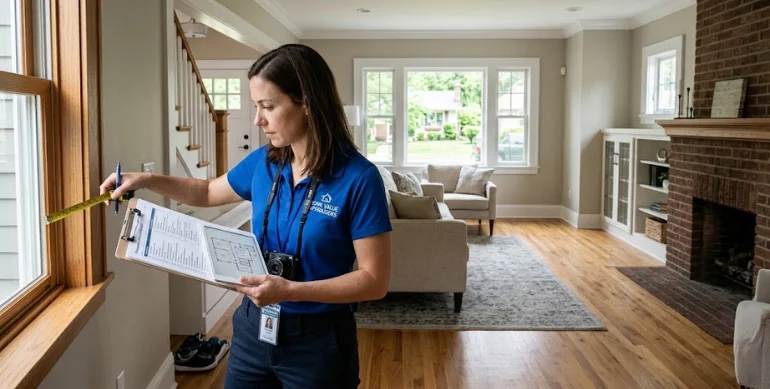
A home appraisal is more than a quick walk through your property. Homeowners often ask, “what do appraisers look for?” The answer includes your home’s characteristics, condition, location, comparable sales, and current market conditions.
An appraiser develops an independent opinion of the property’s market value. That value can affect a purchase, refinance, or other mortgage decision. Knowing the main factors can help you prepare without wasting money on changes that may add little value.
Home Appraisal Factors at a Glance
| Factor | What the appraiser considers | Why it matters |
|---|---|---|
| Comparable sales | Similar recently sold properties | Provides market evidence for value |
| Location | Neighborhood, site influences, market area | Buyers pay differently across locations |
| Living area | Above-grade finished square footage | Helps compare similar properties |
| Bedrooms and bathrooms | Count, size, and functionality | Influences buyer demand |
| Property condition | Visible maintenance and deterioration | Can affect condition ratings and value |
| Construction quality | Materials, workmanship, design | Helps distinguish property quality |
| Lot | Size, utility, shape, and features | Land characteristics can affect value |
| Layout | Functionality and room arrangement | Awkward layouts may affect market appeal |
| Improvements | Renovations and permanent upgrades | May add value when buyers support them |
| Systems | HVAC, electrical, plumbing, roof | Condition contributes to overall assessment |
| Amenities | Garage, deck, pool, fireplace, ADU | Value depends on local buyer demand |
| Market conditions | Supply, demand, trends, timing | Market changes can affect comparable sales |
Direct answer: A home appraiser focuses on market-supported characteristics that affect what buyers will pay. These include location, living area, layout, condition, construction quality, lot characteristics, improvements, amenities, and comparable sales. The appraiser then analyzes those factors against current local market evidence to develop an independent opinion of value.
What Do Appraisers Look For During a Home Appraisal?
The appraiser looks at the property as a whole rather than judging one attractive feature. Fannie Mae requires condition and quality ratings to reflect the entire property. A remodeled kitchen cannot automatically outweigh an aging roof, dated bathrooms, or worn mechanical systems.
The visit also gives the appraiser information that records may not fully capture. The appraiser may observe finishes, visible repairs, room configuration, and exterior features. Accessible areas can also reveal conditions that influence the property’s overall rating.
1. Comparable Sales
Comparable sales, commonly called “comps,” are central to many residential appraisals. The appraiser searches for properties that compete with the subject home. Strong comparisons often share similar size, condition, style, site characteristics, and location. The closest sale is not automatically the strongest comparable. Fannie Mae says the appraiser should choose properties that best represent the relevant market. Older or more distant sales may sometimes provide better evidence than a nearby property with major differences.
If you are preparing to sell, comparable sales also influence pricing before an appraisal occurs. Homlyst’s real estate agent guide explains how agents can use local sales when discussing pricing. A realistic list price can reduce the gap between expectations and current market evidence.
2. Location and Neighborhood Influences
You cannot move your house, but location still affects its value. The appraiser considers market-area characteristics and outside influences that buyers recognize. Views, traffic, nearby development, flood zones, and other location differences can affect comparable selection.
Location adjustments must reflect evidence rather than personal preference. Two similar homes may command different prices because buyers treat their locations differently. The appraisal should account for that market reaction when the available evidence supports an adjustment.
3. Living Area and Home Size
Finished living area is an important comparison point for residential property. Room count, bedrooms, bathrooms, and above-grade living space help define the home. The appraiser may verify measurements instead of relying only on listing information.
Extra space does not have identical value in every market. A buyer may pay differently for above-grade space, finished basements, garages, or accessory structures. Market evidence determines how those differences affect the final analysis.
4. Layout and Functional Utility
Total square footage does not explain how well a home functions. The appraiser also considers room arrangement and features that influence normal use. An unusual floor plan may affect market appeal even when the property is large.
Functionality depends partly on local buyer expectations. Bedroom placement, bathroom access, storage, and circulation can influence demand. The appraiser looks for market evidence before assigning value to those differences.
5. Overall Property Condition
Visible deterioration can influence an appraisal because condition affects marketability. The appraiser may note damaged materials, deferred maintenance, water staining, or other observable problems. Hidden defects are different because an appraisal is not a full home inspection.
Fannie Mae guidance requires an appraisal to report adverse conditions found through observation or research. Freddie Mac also advises homeowners to address small repairs before the visit. Loose railings, leaks, and similar issues can contribute to the property’s overall condition assessment.
6. Roof, Foundation, and Major Systems
Major components help show how the property has been maintained. The appraiser may observe the apparent condition of the roof, foundation, heating, cooling, plumbing, and electrical systems. Serious visible problems can require further attention from the lender.
Do not confuse this review with a specialist inspection. HUD states that an FHA appraiser’s observation is less comprehensive than a licensed home inspector’s examination. Buyers should still use appropriate inspections when they need detailed information about a property’s condition.
7. Construction Quality and Materials
Construction quality covers more than expensive countertops or designer fixtures. The appraiser considers workmanship, materials, design, and the property’s overall quality. Permanent features normally matter more than removable decorations or furnishings.
Quality is also evaluated across the entire home. One premium renovation does not automatically change the rating of an otherwise average property. Consistent improvements generally provide a clearer picture of overall quality.
8. Renovations and Permanent Improvements
Renovations can help when buyers in the local market will pay for them. Kitchen remodeling, bathroom updates, energy improvements, and finished additions may influence value. Their cost does not guarantee an equal increase in appraised value.
Keep records for substantial improvements when possible. Dates, permits, invoices, and project descriptions can help explain what changed. The appraiser still determines whether market evidence supports an adjustment for those improvements.
9. Lot Size and Site Characteristics
The land beneath and around the house also enters the analysis. Lot size, usability, access, topography, and site improvements may affect market appeal. A larger parcel does not automatically produce a proportionally higher value.
The local market provides the important context. Buyers may pay premiums for usable land in one area but show little difference elsewhere. An appraiser studies comparable transactions to determine whether the market recognizes that feature.
10. Garages, Pools, ADUs, and Other Amenities
Permanent amenities can influence value when local buyers value them. Examples include garages, fireplaces, decks, pools, workshops, and accessory dwelling units. The contribution depends on local demand rather than the owner’s construction cost.
An amenity can even create additional considerations. Freddie Mac notes that appraisals may consider whether an accessory dwelling unit complies with relevant zoning. Its effect on marketability and value must also be analyzed.
11. Market Conditions
Home values do not exist independently from the surrounding market. Supply, demand, financing conditions, and changing sale prices can influence the appraisal. A comparable that sold months earlier may need a market-condition adjustment.
Fannie Mae expects an appraiser to analyze market changes between a comparable’s contract date and the appraisal’s effective date. Adjustments should use supported evidence rather than automatic formulas. This requirement helps the analysis reflect changing local conditions.
12. Financing and Transaction Details
The appraiser may also examine relevant details surrounding comparable transactions. Financing concessions can affect how a sale should be interpreted. The goal is to understand whether the transaction reflects reliable market evidence.
Seller concessions sometimes help buyers with eligible closing expenses. Homlyst’s seller credit guide explains how those arrangements can work. The appraiser analyzes their market impact rather than automatically subtracting every concession dollar.
What Appraisers Usually Care Less About

Normal clutter usually matters less than homeowners fear, although clear access can make the visit easier. Personal decorating taste is also different from permanent property quality. The appraiser is developing a market value opinion, not scoring your housekeeping style.
Cosmetic improvements can still support a better overall presentation and condition. Yet expensive staging or décor does not replace market-supported property characteristics. Focus first on repairs, access, documentation, and permanent features.
How to Prepare for a Home Appraisal
Start by making every relevant area accessible. Complete reasonable minor repairs and gather documentation for major improvements. Avoid major last-minute renovations solely because you hope they will raise the appraisal. Prepare a concise list of permitted upgrades, including approximate completion dates. You can also make factual property information available without pressuring the appraiser toward a specific value. The professional must remain independent when completing the assignment.
If you are working with a property professional, discuss recent local sales before the appraisal. Homlyst’s real estate broker guide explains how brokers may analyze comparable properties and local conditions. Good market context can help sellers set realistic expectations before the lender orders its valuation.
What Happens If the Appraisal Comes In Low?
A low appraisal can affect financing when the property value does not support the contracted price. Buyers may renegotiate, contribute additional funds, or use other options allowed by their contract. The appropriate response depends on financing terms and the purchase agreement. The CFPB advises borrowers to review the appraisal carefully for possible factual errors. Buyers using a first-lien mortgage are generally entitled to a free copy of the appraisal. Review property details, comparable information, and other factual entries before deciding what to do next.
A mortgage file can also contain conditions beyond valuation. Homlyst’s conditional approval guide explains how appraisal requirements can fit into the underwriting process. Keep communicating with your lender if the valuation creates a new condition.
FHA Appraisals Can Include Additional Property Requirements
An FHA appraisal has an additional property-eligibility purpose. HUD requires FHA-financed properties to meet applicable safety, soundness, and security requirements. Observable deficiencies may need correction before an FHA-insured mortgage can proceed.
That does not turn the FHA appraisal into a full home inspection. HUD distinguishes an appraiser’s observations from the more detailed work of a qualified inspector. Buyers should consider separate inspections based on the property and their own due diligence needs.
Prepare for the Factors You Can Control
You cannot change your neighborhood or recent comparable sales before an appraisal. You can improve access, complete sensible repairs, and organize records for meaningful upgrades. Those steps give the appraiser clearer information about the property being valued.
Focus on facts rather than trying to make the home look perfect for one appointment. Review the final report when it becomes available and check its property information carefully. If you are buying or selling, use qualified local professionals to understand how the result affects your transaction.
Frequently Asked Questions
What do appraisers look for most?
Comparable sales, location, living area, condition, quality, and market conditions usually carry significant importance. No single feature determines the final value by itself. The appraiser reconciles several forms of market evidence before reaching an opinion.
Does a clean house increase the appraisal?
Cleaning alone does not directly add measurable square footage or another permanent feature. It can provide easier access and prevent maintenance concerns from being obscured. Addressing visible repair issues generally matters more than decorative presentation.
Do appraisers look inside closets?
The appraiser may need reasonable access throughout the property while documenting its characteristics. Exact inspection practices depend on the assignment and property. You should keep relevant spaces accessible instead of blocking them with stored items.
Do renovations always increase appraised value?
No renovation guarantees a dollar-for-dollar increase in appraised value. Market reaction determines how much buyers appear willing to pay for an improvement. A costly project may contribute less than its installation cost.
Can an appraisal be wrong?
An appraisal is a professional opinion based on available data and analysis. Factual errors can occur, so borrowers should review their report carefully. Contact your lender if you find incorrect property details or relevant information that appears missing.